The internet remains one of the significant pathways connecting people in our modern world. In every economy and country, activists, journalists, and citizens use the online space to express their opinions and dig out sensitive matters. However, online censorship has recently been used to suppress and deny people certain information, news, and privileges. Surprisingly, such censorships now take different forms to deprive and oppress the masses, especially politically.
This article offers hope as it discloses how to bypass online censorship. Though there are several ways to do so, a VPN provides the safety and ease you desire. Explore this article to learn about online censorship and how to bypass it.
Bypass Online Censorship – Quick Guide
- Download and install a VPN.
- Connect to a secure proxy server.
- Use Tor Browser for private browsing.
- Change your DNS settings.
- Always use HTTPS websites.
- Access content via mirror sites.
- Switch to mobile data or hotspots.
Editor’s Tip: Best VPNs to Bypass Online Censorship
What is Online Censorship?
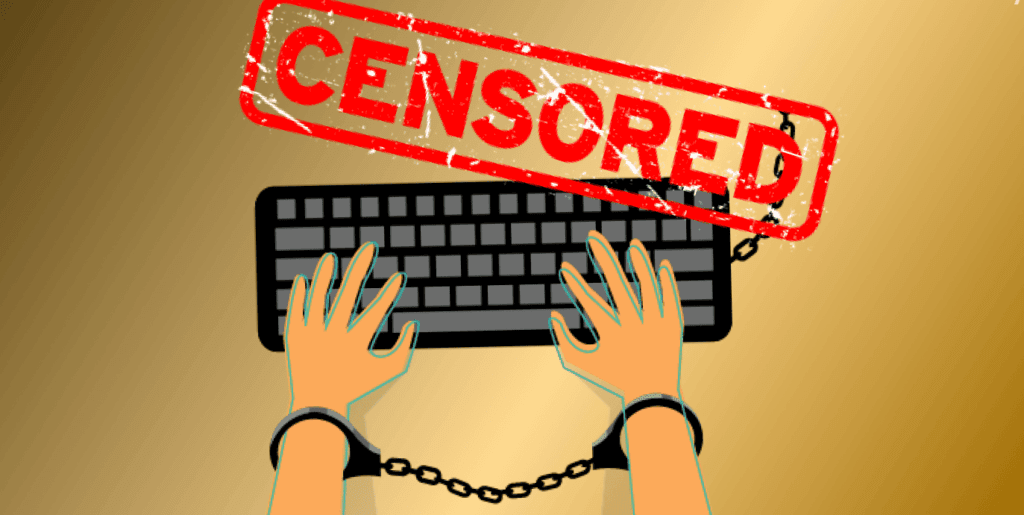
Online or Internet censorship restricts content and information people can see or access online. It serves as a means of controlling digital media and spreading information online. Multiple forms of internet censorship include filtering and blocking online content. Also, it cuts across scrutinizing and punishing users who gained access to certain labeled content on the internet.
Usually, governments implement this type of restriction based on political, religious, or even social reasons. Once they define what to block on the internet, they implement technical processes to enforce the blocking. In some cases, governments promulgate legislation, legal incentives, or policies to compel private technological companies to carry out online blocking and monitoring for them. That’s why you could see some tech giants like Google and Facebook maintaining some levels of censorship.
They decide the type of content allowed on their platforms and could take down some sites and ban certain content. Additionally, governments could use the simple approach of removing websites tagged with illegal content. Internet censorship comes with several downsides regarding the accessibility of regular users. For places with strict restrictions, bypassing such content could mean a jail term penalty. For a clearer view of online censorship, we present some significant situations applicable in our societies today.
Social Media Censorship
We live in a time where many people campaign for freedom of expression, especially on social media platforms. They believe that social networks are the right connections for people who should be free to express themselves and their opinions. However, almost all social media platforms put certain restrictions on users’ content. Generally, they ban content that reflects hate speech, pornography, discrimination, violence, and more. Also, some censorships are politically and geographically inclined on some platforms.
Most governments cite national security as the reason behind internet censorship in their countries. However, reality indicates they plan to disperse all criticism against their political stance and its subsequent spread. Thailand banned all content that defames the royal family. Social media restrictions spiked in Ukraine due to the Russian invasion of the country.
Facebook and Twitter Censorship
In some countries, Facebook and Twitter are subject to censorship to suppress social rebellions and movements. For instance, in China, there’s a permanent ban on the use of these social media. Facebook and Twitter comprise large groups of people from different countries worldwide. They serve as converging points and avenues for protests during social crises.
Any government that tilts toward totalitarianism will censor Facebook and Twitter to control forms of resistance from the masses. One of the key challenges regarding social media censorship is the categorization of acceptable and unacceptable content. Notably, the distinguishing parameters remain subjective and lack clarity.
Facebook and Twitter have difficulty handling content tagged extremist or terrorist while maintaining their overall principle of freedom of expression. Interestingly, each country lays a different definition of content classification. What one country tags as extremist content could differ from another country’s rating. Due to regional restrictions, Twitter users can request removal on the platform. According to Twitter, Russia, India, Japan, Turkey, and South Korea are the top five countries with the most significant removal requests.
Messaging App (WhatsApp and Skype) Censorship
Another aspect of social media that faces censorship is messaging apps such as WhatsApp and Skype, also called Voice Over Internet Protocol (VoIP) services. Notably, these apps provide users with faster and more accessible communication through the Internet. Some governments profess protection for internet providers and telecommunications as they block messaging apps. It’s worth noting that VoIP apps remain the biggest rivalries of phone service providers.
VoIP apps operate independently and under supervision and could be robust tools for organizing opposition and protests. Governments understand these tactics and could censor these messaging apps to limit user engagement. In some cases, they may use spyware to keep track of suspected conversations.
YouTube Censorship
Like some social media platforms, YouTube suffers from some levels of censorship. Posting content or accessing a large audience freely is considered a threat in specific places. Moreover, YouTube categorizes certain channels containing malicious content, making accessing such channels on the platform difficult. Also, YouTube removes some advertisements from particular videos. Many have criticized YouTube for some years for discriminatory controls and inefficiency.
For instance, they believed that YouTube maintains a disproportionate demonetization of LGBTQ content. Additionally, YouTube is believed to have issues with distribution rights. Like other streaming services like Netflix, YouTube sometimes deals with copyrights and distributions. Some distributors will restrict access to specific videos in some countries. Though it’s not a form of politically motivated censorship, it could limit or completely deny you access to certain content.
Blocked Websites
Governments could censor some individual sites for various reasons. Such websites could be labeled as a threat to the authorities or found with unacceptable content. Moreover, countries could pass laws that hinder certain activities and content publication. So, some censorship could focus on gambling, child pornography, extreme violence, and others.
News Media Outlets
Some authorities could block targeted news outlets in their countries through extended press censorship. Such news websites are mostly marked for their publications and content that criticize government actions or raise political opposition. This type of censorship is meant to reduce the public’s probing eyes and any rising opposition against the sitting authorities.
Additionally, several countries ban independent and foreign news outlets such as BBC News and CNN. The move is to limit its citizens’ access to information that could expose their governance position. Iran and Turkey are some countries that have heavy censorship of the press. Some countries like Myanmar and North Korea place threats on journalists based on their content. Professionals could face detention, violence, and even death for writing content that opposes the authorities. While trying to remain safe, journalists could opt for self-censorship in these countries.
Pornographic Websites
With a complete ban on obscene content, some countries censor pornographic websites. People who want to access such sites must use a bypassing approach. Notably, content ratings are different in different countries. What appears obscene in one place could not be considered as such in another.
Human Rights Organizations and NGOs
Some human rights organizations and non-governmental organizations (NGOs) promote freedom of speech and internet freedom. However, some countries censor these organizations, such as Amnesty International and Reporters Without Borders. Because of these governments’ censorship, residents may not easily access information on online freedom. Their best option is to learn how to bypass online censorship.
How to Bypass Online Censorship
You can conveniently use different methods to sidestep online censorship. While some approaches demand specific software downloads, others involve reconfiguring your browser. Notably, the approaches have various levels of technicality as means of circumvention. With our extensive list of methods, you choose the one that is most convenient for you.
Using A VPN to Bypass Online Censorship
The use of a VPN as a means to bypass internet restrictions could come for different reasons and with benefits.
How A VPN Works in Bypassing Online Censorship
Your online activities will become hidden with a virtual private network (VPN). The VPN uses encryption to secure your data and keep it anonymous. Nobody can read your data unless they unlock the encryption key. The encryption key protects users’ data and online activity. Only the user’s computer and the VPN server know the encryption key. Usually, the VPN will redirect your traffic to another remote server, mainly in a different country. This will make it look like your system is located in a different region from yours and open access to restricted content.
With the VPN, your device will assume a different IP address in any country you choose. So, you could bypass any internet censorship within your country as you think the IP address of the VPN server. Internet service providers will see your IP address as entirely located in the country you chose via the VPN server. The connection will give you access to different websites, social media platforms, and other online services in the country or region.
You will get special features for most VPN premium subscriptions, such as using obfuscated servers. These servers will even conceal the fact that you have a VPN on your device. Also, you will enjoy multi-hop connections that place your online activity on several servers, keeping your data more private. Moreover, some VPNs have built-in virus scanners to protect against malware attacks.
Best VPNs to Bypass Online Censorship – Detailed List
1. NordVPN
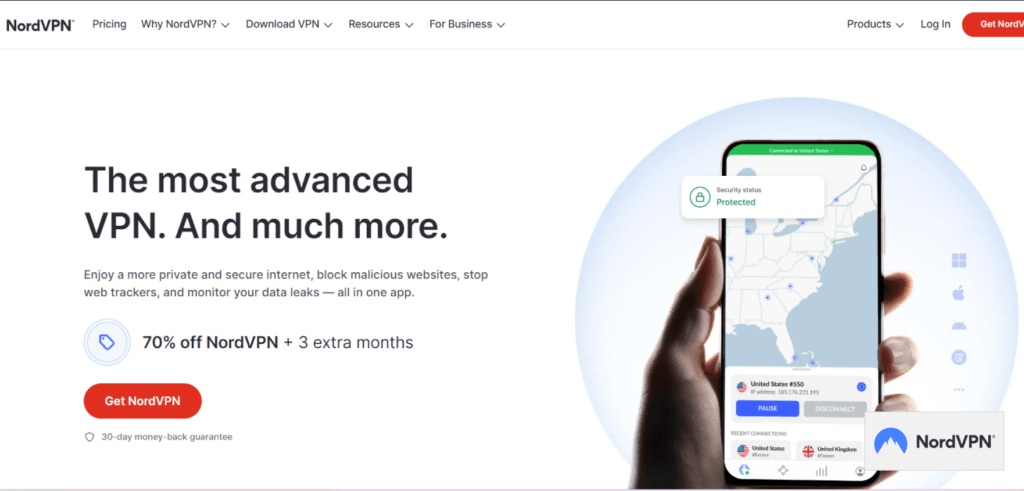
We rate NordVPN as a top and reliable VPN provider. Its services are globally famous, and it boasts over 5,000 servers worldwide. NordVPN has built a name for itself in terms of security, confidence, and efficiency in bypassing internet censorship. It’s your call-on option when you want to protect your online privacy.
Its VPN services rely on high-tech encryption that ensures edge-cutting safety through anonymity in the online space. The provider leaves no logs on users and doesn’t store personal information that authorities could intercept. It ranks among the top no-logs VPN providers available in the market. NordVPN bypasses geo-blocked sites and content. By using the VPN, you will easily access platforms like WhatsApp, Skype, YouTube, restricted news sites, and more.
Moreover, it blocks and offers access to ChatGPT in censored regions. Its pricing is from a $2.99 subscription rate. You can enjoy a 69% discount with up to 2 year plan for the VPN. Users get a 30-day guarantee for cash back from the VPN provider to evaluate and confirm the suitability of the VPN.
Best Features
2. ExpressVPN
ExpressVPN is another excellent VPN provider that offers users impeccable online protection and security. It’s a reliable bridge for bypassing internet censorship while remaining anonymous in such engagements. It has over 3,000 servers, accounting for its widespread coverage across different regions. It has grown, with millions of users on its record.
Over the years, the VPN has garnered a reputable stance in the market for unblocking restricted content. Moreover, it has fewer intervals of speed drop-off, reducing page load times while browsing. Part of ExpressVPN’s growing factor is its top-notch security and privacy features, as it offers a kill switch, split tunneling, 256-AES encryption, dedicated servers, and 24/7 customer support. It also has a 30-day money-back guarantee to allow you to experiment and confirm its authenticity.
Best Features
3. Private Internet Access
Private Internet Access (PIA) is another VPN provider offering an excellent online user experience. With this VPN, you are sure of solid security and protection for your data as you engage on different platforms and websites. It has more than 30,000 servers worldwide, giving users broader unblocking coverage online. It is rated as the most extensive server network worldwide.
The VPN is also highly user-friendly and offers the protection you need while bypassing expurgated content. It is also cheap, with a monthly subscription rate of $2.03. Like others, VIP users can test the VPN and confirm their choice using its 30-day cash-back guarantee. They will also enjoy its high speed for streaming and other online activities.
Best Features
Other Methods of Bypassing Online Censorship
Besides using a VPN, you could bypass internet censorship through the following methods:
1. The Onion Router (Tor)
The Onion Router is an online network that serves as a browser for communication. On a broader scale, Tor comprises thousands of servers globally that ensure users’ safety. It allows the encryption of messages and anonymous engagements with a high level of security. The network’s functionalities are unique and aim to retain users’ anonymity.
On the network, data packets are separated into tiny particles and allowed to pass through multiple layers of encryption. The data pieces are redirected to numerous servers before converging at the user’s end. The entire Tor data routing and encryption process takes a long time, slowing down the browser’s speed. However, it’s unique to maintain anonymous internet browsing and hide all your online activities. With the cloaking quality, you can access censored content without anyone identifying you.
Moreover, with its functions, Tor is the essential means of accessing the “dark web,” which remains inaccessible to the conventional network. Though the dark web has no regulations or censorship, it’s known as an environment of crime. However, you should note that Tor can’t unblock some platforms like Twitter, Facebook, or Skype. It only provides you access to some browser content.
2. Changing Your DNS Server
Internet users get access to specific websites using the domain name system. It would be best to input a domain name in the URL address bar to browse any website. Usually, the servers couldn’t process your direct request with such a hostname. So, the DNS would have to translate the domain into a machine-friendly IP address of the website you requested.
Getting the correct match of the requested site is known as DNS resolution and could be used to implement censorship. The Internet service provider will “poison” DNS requests to any restricted domain. This is why your ISP redirects you to a spoofed site or “404 Not Found” page when you try to access blocked sites.
By changing your DNS server, you will create a possible solution. The changed server will route your DNS request through another country where it’s accessible. However, your IP address is still open with no anonymity, and your online activity is not encrypted.
3. Using a Proxy Website
Proxy websites also offer users access to content on blocked sites. With a proxy website, you are assigned an anonymous IP address that conceals all your online activities and protects your data. This process is a relay, making a proxy similar to a VPN.
Despite its concealing effect, proxy websites are not entirely safe. They could log users’ browsing requests and online activity. Moreover, in cases of a breach or hack of a proxy, your data would be vulnerable to bad actors. Additionally, proxy websites are pretty slow and do not offer a kill switch option for users. They also provide limited server choices, which could not be the best option for bypassing online censorship.
4. Wayback Machine
A Wayback Machine is a digital library that keeps a copy or record of nearly all websites on the Internet and retains the various versions. It is also referred to as the Internet Archive. The machine is a possible point of call for past content and information that ever existed on the Internet. You can get specific news articles that are unavailable on the Wayback Machine in your country. The machine is also the right place to browse for particular documentaries, movies, e-books, and other censored content.
5. The Use of IP Instead of URL
Notably, every URL of a website has an associated IP address. It’s the URL that the DNS calls out once a user is accessing the page. Some censorship will only block the URL, leaving out the IP address. So, you can use the IP address to access such blocked sites seamlessly. Here are approaches to discovering the IP addresses of some blocked websites:
6. Google Translate or Google Cache
Google Translate can offer you access to some blocked content in some instances. To use this approach, you must choose any language other than English to translate. Also, the translation must be in English. Copy the site URL you wish to access and paste it into the translation box. In the translated section, click on the URL. The translation tool usually operates as a proxy.
Alternatively, Google cache servers can do the trick for you. Firstly, type in “Cache” in your browser space, then the domain name of the site you want to access. The browser won’t go to the blocked sites; it opens the pages via Google’s cache servers. Notably, the locations are where the sites are locally saved for a short period.
7. SSH Tunneling
SSH tunneling involves SSH (Secure Shell) sending requests through a remote server. Usually, you must have an account for a remote server to complete this method of censorship bypass. You can rent a dedicated server for this purpose; alternatively, you can purchase VPS hosting that will offer you the IP address and protocol you need for the connection. Windows users need an SSH client such as PuTTY to make the connection. For macOS users, the terminal will provide the lead. Afterward, you should enter the command: “Ssh -D 12345 (username)@(hostname).(domain).“
It would be best to input your login credentials to connect. Note that you will get the login details after purchasing access to a remote server. Once you’re connected, you will still leave the terminal open. Then, proceed to your browser and locate the option to include a manual proxy configuration. Type 127.0.0.1 in SOCKS hosts, followed by the port number you’ve sent the SSH request.
8. Subscription to the Site’s RSS Feed
Some sites will request a user’s subscription to their RSS feed, a text file created by their site publishers. An RSS feed contains a list of all content and articles on the website and is usually updated in real time. The RSS feed serves to access news and other updates on some sites. It is worth noting that this method works perfectly for only blocked sites with an RSS feed. So, it’s suitable for news websites and social media blogs. Accessing feeds requires using an RSS Reader such as Feedly. The software usually downloads all the web pages, including blocked content, into the feeds.
9. Browser Extension
The design of some particular browser extensions could bypass censored content. This makes such extensions worthwhile access tools to block sites with content relevant to specific social media platforms like YouTube. Some extensions to try out include Censor Tracker (Firefox), UltraSurf (Chrome), and Opera browser with built-in VPN.
10. The Use of Firefox from USB Drive
There are cases where you can’t download specific browser extensions. This could happen when you reside in a country with higher levels of online censorship or use particular work or university networks that hinder adding extensions. In such cases, you can rely on Firefox Portable as a solution. It is another version of Mozilla Firefox you can operate from a USB flash drive, CD-ROM, or any portable device. With a Firefox Portable, you can bypass online censorship and access some blocked content.
11. Using URL Shortener
For some blocked URLs, using a shortener tool could help enable access. Programs such as TinyURL and Bitly help customize a URL, giving a different but shorter version that may not be blocked. This method applies when your ISP or network administrator blocks the sites. However, it does not work when governments block websites nationwide.
12. Conversion of HTML to PDF
Converting an HTML site to a PDF document can give access to certain websites or content on the internet. The process requires the use of software such as SodaPDF. First, you will input the full URL of the blocked site. Then, the program will convert the site to a PDF document with a single click.
Conclusion
Online censorship involves using various tools and strategies to restrict users’ access to certain information and sites on the Internet. Governments sometimes pioneer censorship for political, social, or even religious reasons.
You can bypass online restrictions using a good VPN. The tool will allow you access to blocked content by encrypting your data and giving anonymity online.
Alternatively, you can use other methods to access censored sites and content. These include proxy sites, browser extensions, TOR browsers, and URL-shortening tools.
Frequently Asked Questions
Certain governments enforce legislation that promotes some online restrictions in their regions. However, others have laws that oppose such limits. The US’s Internet freedom policy supports preserving and expanding the internet as an unlimited, global space for expressing freedom and interaction.
Virtual private networks (VPNs) offer access to certain blocked content on the Internet. A VPN encrypts your data and cloaks your IP address so that it appears to be from a different location. It’s an excellent means of overcoming geographical online restrictions.
Iceland is a global leader in internet freedom. It has a few online censorships but allows citizens and residents to access various internet content. Moreover, its government has no history of online shutdowns.