Do you know that business travel allows entities to run different business events and meetings? Through such trips, companies can hold conferences, trade fairs, exhibitions, and congresses. It’s worth noting that Americans make over 405 million far-distance business trips annually. Business travel is a significant aspect of a global business that enhances growth and profitability.
Moreover, business traveling ventures offer some entrepreneurs or company employees opportunities to combine business and leisure. For many traveling employees, it’s an opportunity to briefly escape the hustle and bustle of work to see new places, have fun, and relax. This article explores the trends and interesting statistics about business travel and highlights the impact of such trips on both the business world and the traveler.
Key Statistics
Business Travelers Industry Statistics
1. While business trips are gaining more popularity globally, just 60% of entities have a well-drafted business travel policy. Some companies still operate with make-shift approaches in corporate trips for employees.
2. Some corporate travel policies measure specific metrics to ensure continuous business trips. These include policy compliance, expenditure, traveler satisfaction, and savings.
3. 79% of business travel managers confirm the importance of collaborating with travel management firms for business trips. This approach aids a business’s planning, budgeting, and expenditures to ensure maximum efficiency and savings.
4. In 2018, US travelers made over 463 million business trips within the country. Just a few companies engaged in business-related travel outside the country.
Business Travelers Demographics Statistics
5. Men comprise the largest number of business travelers in the industry. Data from the Bureau of Transportation (BOT) revealed that men constitute about 77% of business travelers.
6. In 2022, 55% of work travelers in the US will be men, while 45% will be women.
More than half of business travelers are over 45. Generally, over 55% of business travelers fall within the 30 – 49 age range.
7. Regarding profession, 53% of corporate travelers are those in managerial or technical positions. Just about 23% of such trips involve workers within the sales unit.
8. Most business travelers prefer expedited processes, especially through personal data. About 22% (one-fifth) of frequent travelers want the travel entities they use to remember their data.
9. 65% of business travelers can provide additional data if it speeds up their traveling processes.
10. 90% of corporate travelers will disclose personalized experiences regarding the time taken to share travel preferences.
11. Frequent business travelers indicate certain expectations and considerations for their trips. Here are some of the indicated factors:
- 44% convenience
- 44% Quality
- 38% trustworthiness
- 30% noise-free
- 28% comfort
- 28% affordability
Business Travelers Expenses Statistics
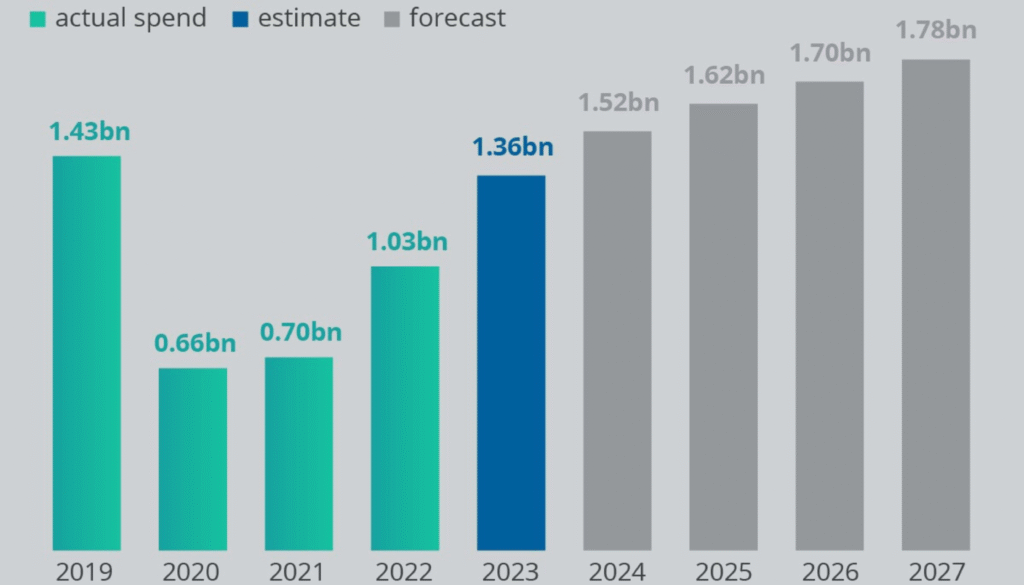
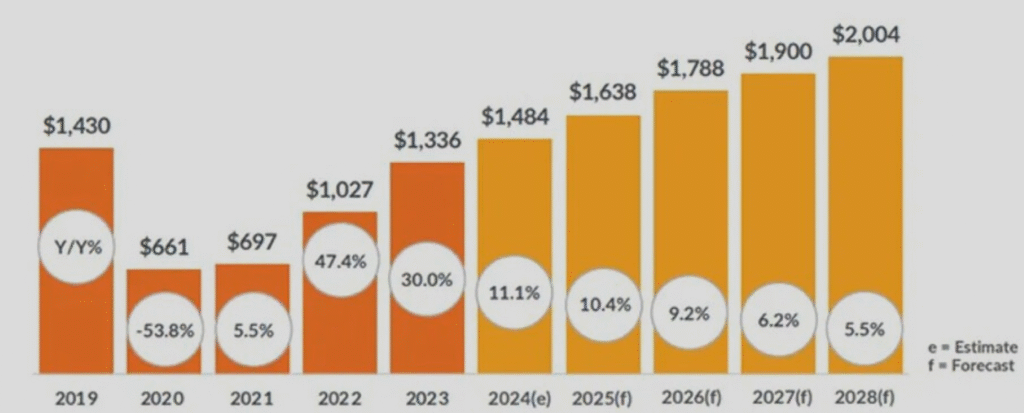
12. The global business travel industry spent $1.4 trillion during pre-pandemic.
In 2022, corporate trip expenses increased by 47% to reach $1.03 trillion. Business travel spending is expected to accelerate with increasing demand and an improved COVID landscape. Moreover, pent-up organizational meetings and other factors drive several companies’ business travel options.
13. Favorable economic conditions are expected to spike business travel spending to almost $1.8 trillion by 2027.
14. Business travelers could use personal funds to augment up to 12% of the total flight tickets in a year. Business travelers almost double a person’s costs compared to non-business airline passengers.
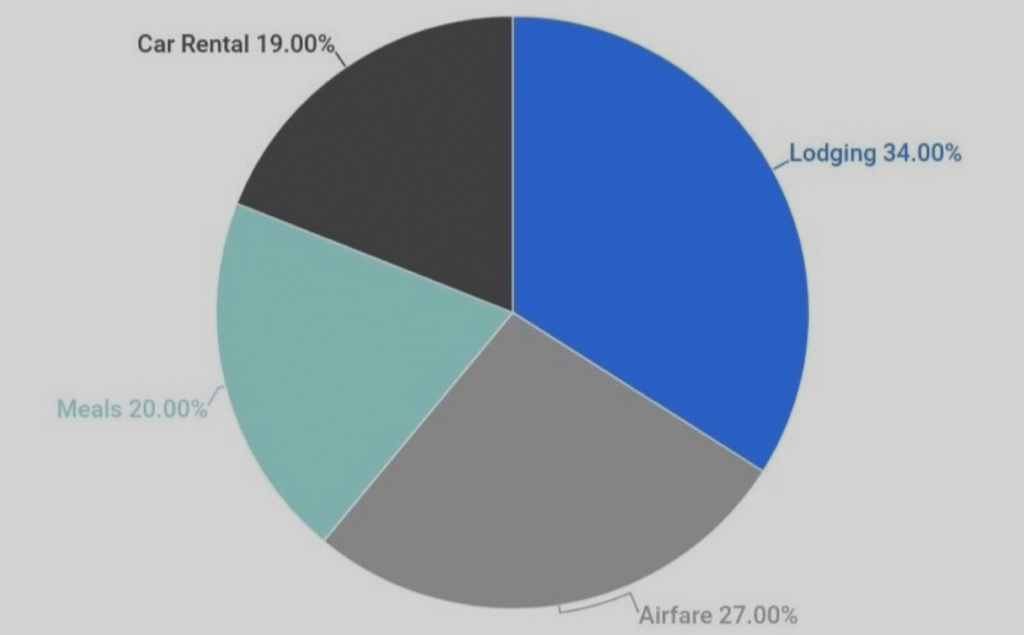
15. About 55% of people on business trips can spend personal funds to upgrade their comfort. These include hotel accommodations, car rentals, and even flight seatings. Each dollar a company spends on business trips increases revenue by an average of $9.50 and makes a minimum profit of $2.90.
16. 66% of business travelers confirm that their companies give a corporate credit card as a payment method for business trips. However, one-third of this percentage disclosed that such cards are strictly for booking the trip.
17. In 2021, business travel represented 20% of the global tourism expenditure. That year, corporate travelers spent over $740 billion worldwide, with Chinese tourists at the top.
Business Travelers Destinations Statistics
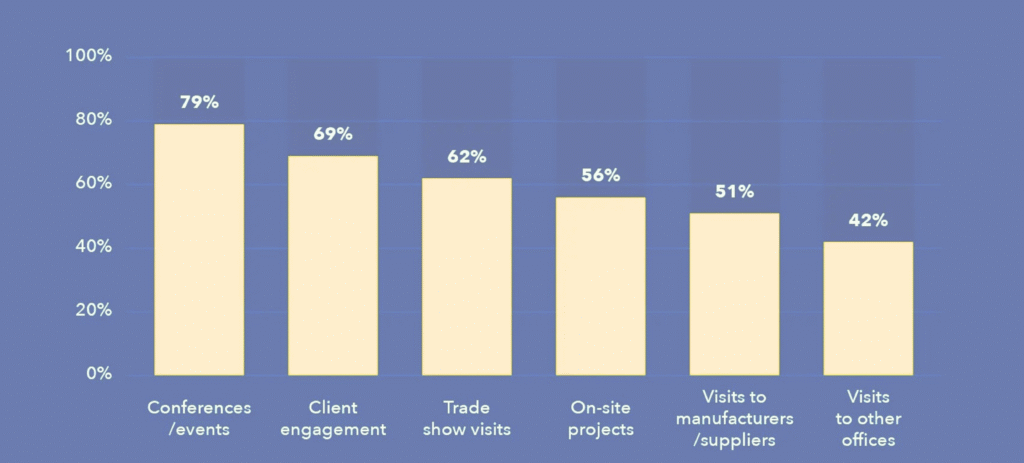
18. New York, Shanghai, Bangkok, Tokyo, and Guangzhou are popular destinations for business trips.
19. The United States and China have become the top global markets for business travelers. Other prominent destinations in this aspect include Japan, Germany, and the United Kingdom.
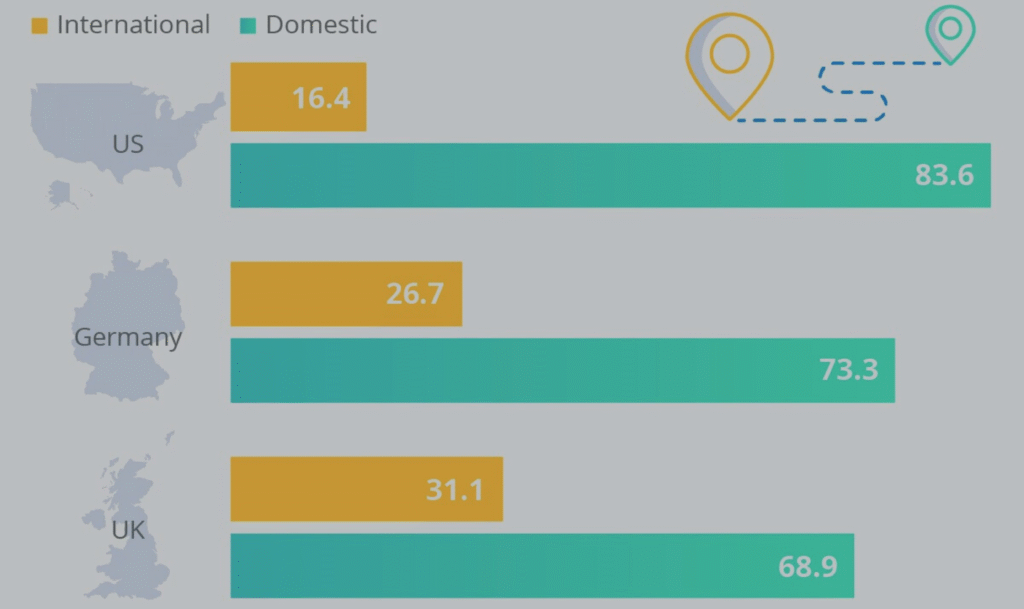
20. In 2017, the UK saw a 0.7% decrease as a preferred destination for corporate travel.
21. New York is generally the most common global destination for business travelers.
22. Business travelers in Asia represent over one-third of corporate travel worldwide.
23. About 7% of destinations for business trips are over 1,000 miles from the starting point.
Bleisure Travel Statistics
Bleisure travel is a type of trip that combines business and leisure for travelers. This term has become quite popular within the business world. While some businesses limit leisure during work, others, like remote work, encourage leisure and business trips.
Here are some striking facts about bleisure.
24. While Americans make more than 405 long-distance business trips, 60% of such travels include employees’ vacation periods.
25. Up to 86% of bleisure travelers confirm corporate travel is crucial for career development.
26. 57% of businesses include a policy that allows staff between 20-30 years old to make bleisure travels.
27. About 67% of bleisure trips start with attending a conference as the major purpose. However, 46% and 42% of such travels focus mainly on external meetings and sales opportunities.
28. 39% of bleisure travelers always seek job opportunities with options for business trips. They confirm their readiness to let go of other benefits in a job for more opportunities to embark on business travel.
29. Bleisure trips could offer travelers different time frames for each travel. 17% of such trips last four nights, while 31% and 39% stretch for three or two nights.
30. About 35% of those who engage in bleisure trips have at least one person accompanying them. However, 36% indicated they will visit with family members or friends at their destinations.
31. 74% of employees want their companies to cater to extracurriculars during bleisure trips. Also, 38% of bleisure travelers indicated that the trips offer them the opportunity to travel with a guest.
Statistics on Motives for Business Travel in the US
32. 54% of business travel focuses on developing a better relationship with the companies’ stakeholders.
33. 15% of business travelers gain knowledge to deal with competitors.
34. About 29% of businesses initiate corporate trips for enhanced professional training and development.
35. Up to 24% of business trips are organized for staff to explore current business trends. The travelers meet and interact with colleagues and associates from different global regions to expand their business horizons.
36. 29% of business travelers confirm that their trips involved creating awareness of the company’s products and services in other organizations and regions.
37. About 22% of travelers revealed that their business trips help trigger the right motivation and engagement.
38. Twenty percent of business travelers are involved in analyzing sales reports and other organizational records. Some entities prefer to bring staff from a different region for record audits. This helps to avoid compromise due to over-familiarity among colleagues.
Statistics on the Impact of Business Travel on Health
While business trips or travels benefit organizations, they might also seriously impact the staff who embark on them. These few statistics attest to that fact.
39. To many employees, business trips provide a much-needed break from their regular work routine and family duties, allowing them to engage in new and fun things in a new environment.
40. According to a World Bank study, nearly 75% of staff experienced high business travel-related stress.
41. About 18% of business travelers reported that business travel helped improve their mental health and relieve work stress. Of this 18%, the highest percentage (23%) is American travelers, while 17% are UK and German travelers.
42. A study about the impact of business travel on health found 33 stress-triggering factors during business trips, including poor internet connection, flying economy or long-haul flights, traveling on weekends, etc.
43. The study also found that business trips help employee productivity a lot. Through business trips, firms can improve traveler well-being and boost productivity by a whopping 32%.
44. A study published by the International Society of Travel Medicine found that international business travelers significantly presented with lower blood pressure, lower BMI, sleep deprivation, and excessive alcohol intake than non-travelers and ordinary international travelers.
45. A health insurance study among World Bank staff found that travelers had higher insurance claims for health conditions, including asthma and back disorders, than non-travelers.
Other Facts About Business Travel
46. Almost 40% of millennials go on business trips.
47. Most millennials consider business travel as a means to explore different regions and places. About 55% of such travelers will delay their business trips by including a spice of leisure.
48. 67% of business travelers seek assistance from other brands to make better decisions while planning future trips.
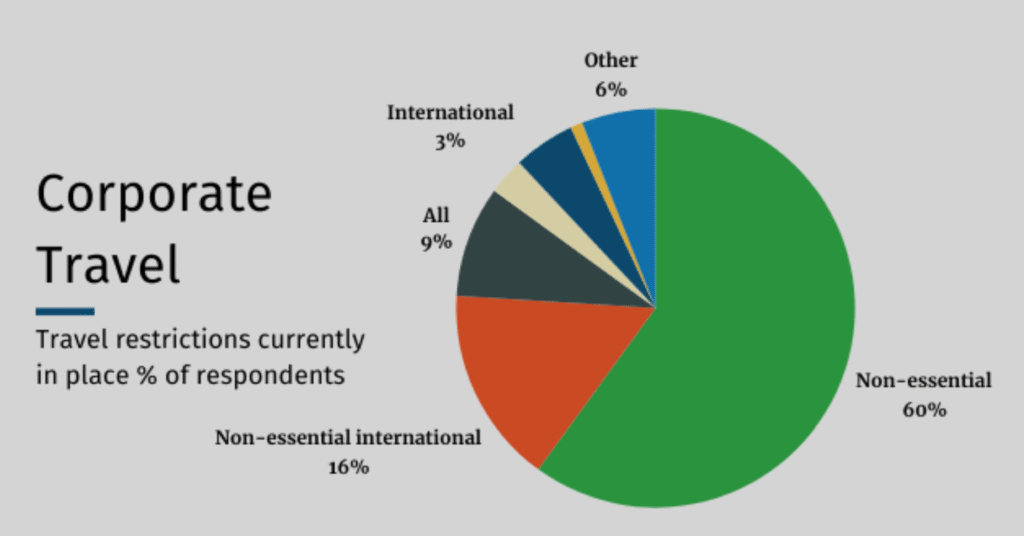
49. Up to 86% of people who intended to go on international corporate trips had to cancel such plans during the global pandemic. Notably, business travel dropped in 2021 as it reached 10% of the total pre-COVID traveling record.
Conclusion
Business travel can be a growing measure for a company despite the associated costs. It allows staff to visit and interact with other professionals in the field, which could promote productivity. Also, business travelers in the sales unit could boost the overall corporate revenues through such travel. Moreover, for bleisure trips, travelers could enjoy their business destinations with some leisure elements.
FAQs
Most business travelers are professionals in managerial or technical positions in a company. Males travel more for business-related matters than women, with popular age ranges between 30 and 49.
About 20% of all types of traveling are business-related. Though business travelers constitute 12% of passengers on an airline, they account for over 75% of an airline’s travel profit.
New York City in the United States is among the leading destinations for most business trips. It records at least 7.5 million business travelers arriving every year. On a global scale, the popular countries for business travelers include the US, Japan, China, France, Spain, and Germany.
Most leisure travelers believe that including leisure in business trips will increase their work performance. It allows them to explore their destination and interact with people without working conditions. However, some indicated that the need to carry their one love along on far-distance business travel forms the basics of leisure trips.
With the increasing use of technological innovations, millennials are taking adaptive measures while on business trips. These include taking business travel as a status symbol and adding leisure by extending such corporate trips.