
Businesses in the UK have faced several challenges, particularly in international marketing and trade after Brexit. Since Britain exited the EU, reaching more customers in the EU states has become even more complex, and companies struggle to overcome this hurdle daily. Trade regulations have shifted post-Brexit, coupled with economic uncertainties, making it challenging for businesses to plan effective marketing strategies.
To help the matter, staying updated with the latest trends and data is crucial. This article shares essential Brexit marketing statistics that can offer insight into business dynamics in the UK after it left the EU. Understanding these factors, statistics, and trends will help businesses make smart choices and keep up in the changing market.
Key Statistics
Post-Brexit Marketing Statistics

Brexit has had far-reaching consequences for trade. The following are essential figures outlining the problems and interruptions caused by the UK’s exit from the EU.
1. Exports to the EU Have Decreased By £5.3 Billion.
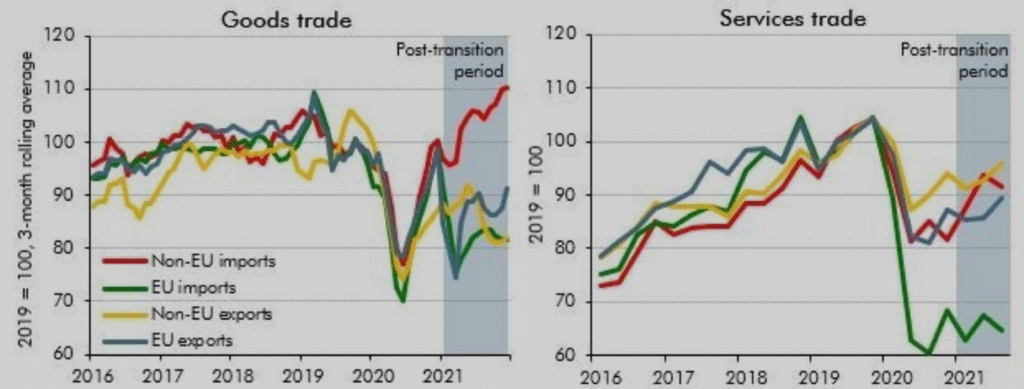
One of the most immediate consequences of Brexit has been a decline in UK exports to the EU. This decrease of £5.3 billion highlights the disruption caused by new trade barriers and procedures implemented after the UK left the European Single Market.
2. Imports from the EU Fell By £7.2 Billion.
The drop in imports from the EU, at £7.2 billion, further emphasizes the challenges businesses face on both sides of the English Channel. Increased paperwork, customs checks, and potential tariffs have likely contributed to this decline.
3. EU Accounted for Over Half of UK Trade.
Before Brexit, the EU played a central role in UK trade. Over half (51.6%) of all UK imports originated from the EU, showcasing the deep economic integration. Similarly, over half (53%) of UK exports went to EU countries.
4. One-quarter of UK Food Comes From the EU.
The UK relies heavily on the EU for a significant portion of its food supply. Statistics show that one-quarter of all food consumed in the UK comes from the EU. Notably, fruits, vegetables, and meat are the main food commodities imported from the EU into the UK.
5. Global Trade Was Also Affected, But to a Lesser Extent.
UK exports to the rest of the world declined by 7% (£12 billion) compared to the same period in 2019 (Jan-Oct 2021). UK imports from the rest of the world saw a smaller 3% decline (£227 billion) during the same timeframe.
Marketing Impact Statistics
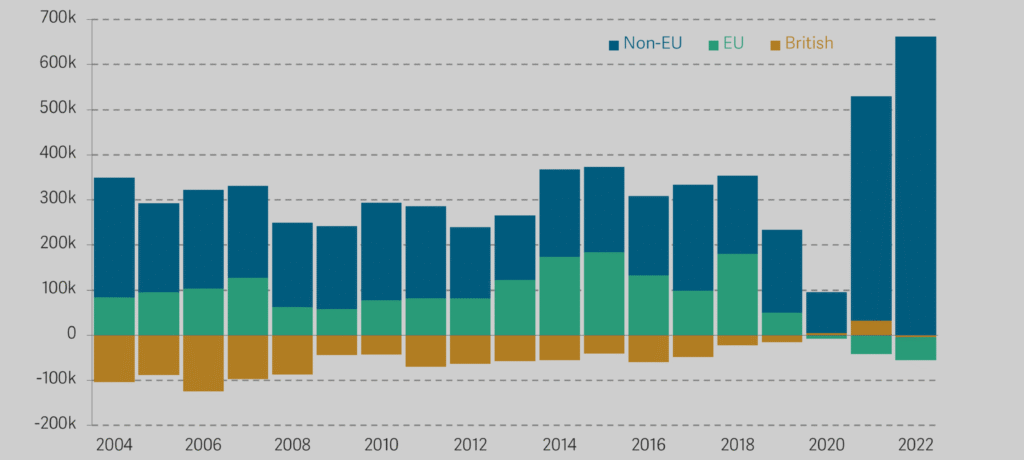
6. No Significant Changes in Light of Brexit. More than 50% of respondents indicated that their firm had neither implemented any changes nor planned to do so in response to Brexit.
7. According to a study conducted by Econsultancy, 10% of the respondents reported that they had developed and implemented a specific marketing strategy in response to Brexit.
8. According to a report, UK businesses are safe because they don’t rely on goods imported from the EU. However, a concerning statistic is that trade between the UK and the EU has not improved since the Brexit deal. The total trade is now £308 billion, only slightly higher than the £302 billion before the deal.
Post-Brexit Future Marketing Strategies
9. Brand Refuse to Change Marketing Strategies and Price Hikes.
Some established brands, like High Street Retailer Next, haven’t significantly altered their marketing plans. This brand somehow believes Brexit’s impact on its target market is not that active (minimal). Many retailers expect prices to keep increasing after Brexit, leading to marketing focused on affordability. For example, Asda is advertising budget-friendly staycations.
10. Some Firms Are Playing this British Card.
Some companies see Brexit as an opportunity to emphasize their British identity. Tesco’s “Jacks” brand, with its white, red, and blue packaging, and Wetherspoons’ Brexit-themed beer mats are examples of this approach. On the other hand, some businesses are careful not to upset customers by taking strong pro- or anti-Brexit positions. Instead, they prefer to use neutral marketing strategies to avoid any controversy.
11. Trade Slowdown Compared to Pre-Pandemic Levels.
According to reports, total exports from the UK to the EU have decreased by approximately 13.5%. Also, the UK-EU exports of medical and sports supplies, jewelry, toys, and office supplies have declined by 30%. The decline in UK-EU trade is even more concerning when compared to pre-pandemic levels. Statistics show that UK exports to the EU fell by 12% in the first ten months of 2021 compared to the same period in 2019. In addition, UK imports from the EU are down by over 20%. The drop in imports from the EU is even more dramatic, with a decrease of over 20% compared to pre-pandemic levels (Jan-Oct 2021).
Global Trade Statistics Post-Brexit

12. The Global Trade Grows.
Based on statistics, the two-way trade between the US and EU increased from $532 billion in 2020 to $627 billion in 2021 (Jan-Oct) after Brexit. Similarly, China-EU trade also recorded some growth in January 2021, rising from $479 billion in 2020 to $558 billion in 2021.
13. As the UK Nears the Eighth Anniversary of the Post-Brexit Vote In 2024, Leaving the EU Became Less Popular.
Since July 2022, more and more British voters have said they think it was the wrong choice. However, people are still split on what kind of relationship they want with the EU. Among those who voted to leave, nearly half (46%) favor increased trade ties with the EU, but without rejoining the single market. For those who voted to remain in the EU, rejoining is the most popular option, with roughly 56% supporting it.
14. How the UK Referendum Exposed a Divided Nation.
All regions of England, except London and Wales, voted to leave the EU. The most vital support for leaving came from the West Midlands (over 59%) and the East Midlands (almost 59%). However, Scotland (62%) and Northern Ireland (55.8%) voted to stay in the EU. Many large English cities like Manchester, Liverpool, Leeds, and Newcastle had a majority who wanted to remain in the EU. Younger voters (18-24 years old) were also more likely to vote Remain (almost 75%) compared to older voters (only 40% of those over 65).
Brexit Referendum Statistics & Facts
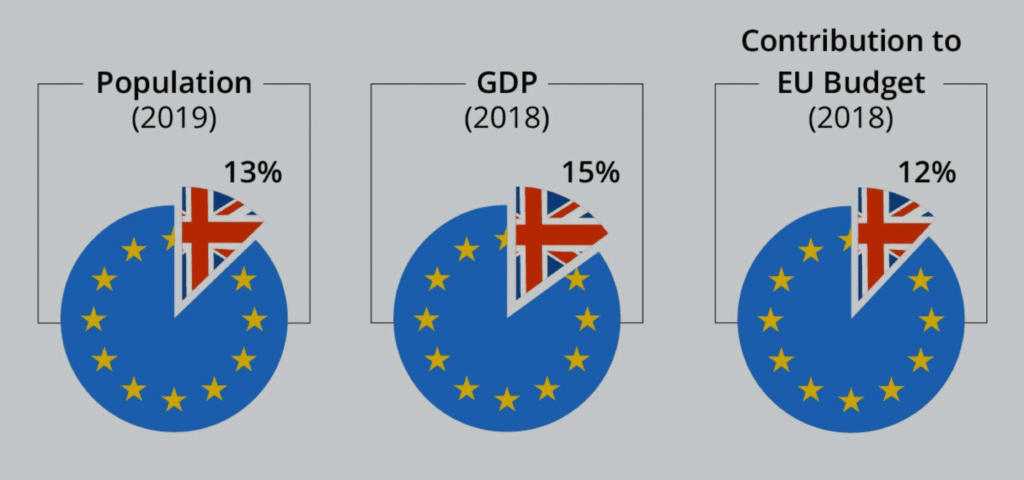
15. The Brexit Breakup on January 31, 2020.
On this date, the UK officially left the European Union (EU) after nearly 50 years of membership. The period between the 2016 post-Brexit vote and the UK’s departure in 2020 was marked by significant political instability.
16. According to a Report, the UK Went Through 3 Prime Ministers: David Cameron, Theresa May, and Boris Johnson.
Although the UK formally left the EU on January 31, 2020, the rest of the year was considered a “transition period.” During this time, travel rules and access to the EU single market mostly stayed the same. However, the country’s economy, measured by the GDP, grew more slowly. In 2018, it grew by about 17%, less than the growth in 2016 and 2017.
17. Economic Growth Trends and IMF Forecasts.
The International Monetary Fund (IMF) thought the economy would grow by 1.3% in 2019 and 1.4% in 2020, but it actually grew by 1.6% in 2019 and then dropped by 11% in 2020 due to various reasons. However, in 2021, the GDP bounced back strongly, growing by 7.6%, but it slowed down again to 4.1% in 2022. In the three months before January 2019, the unemployment rate in the UK reached its lowest point in 44 years, standing at just 3.9%.
18. Due to the EU-UK Free Trade Agreement, Many People Consider 2021 To Be the Main Start of Brexit.
According to data, 51.9% (17,410,742) voted for the UK to leave the EU, while 48.1% (16,141,241) disagreed. In the referendum, 33.57 million people voted. Out of these, 17.4 million voted to leave the EU, and 16.1 million voted to remain. The turnout was 72.2 percent, the highest for a UK-wide election since 1992.
Other Notable Post-Brexit Statistics
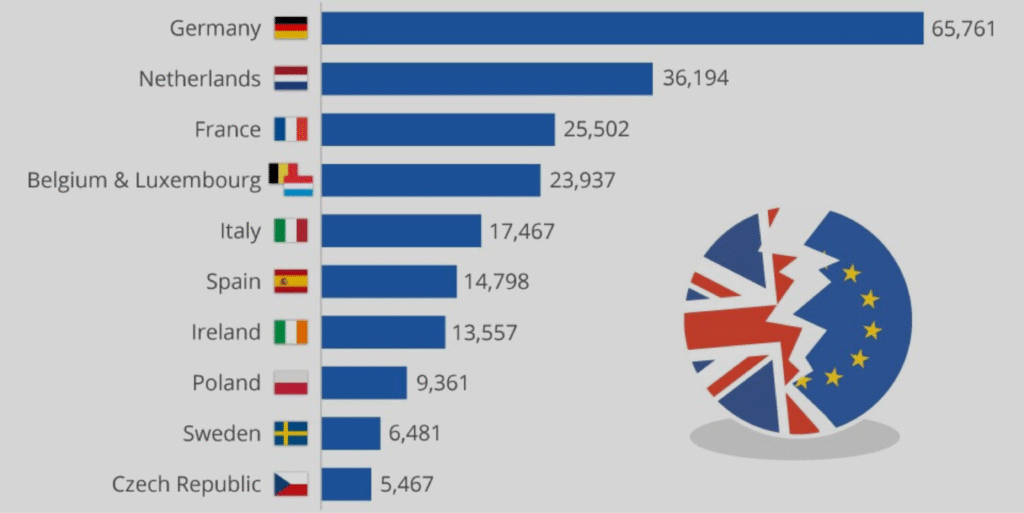
19. The Estimated Cost of Leaving.
The financial settlement that the UK owed the EU after Brexit was called the “Brexit bill.” Estimates from the UK government placed the cost at up to £32.8 billion.
20. Why There Was a Bill.
This sum included two main parts. First, it covered the UK’s financial contributions during the transition period, as it was still considered an EU member state. Second, it included the UK’s share of the EU’s existing budget commitments for 2020.
21. The EU’s Initial Request.
The EU initially proposed a much higher figure, with estimates suggesting a gross amount of €100 billion. After accounting for UK assets held by the EU, the net cost was estimated to be between €55 billion and €75 billion. A report from July 2017 by the House of Lords said that after Brexit, UK businesses might need to pay higher wages to get people born in the UK to work for them.
22. Projected Effects of Post-Brexit Trade Agreements on UK Trade.
Dr. Monique Ebell predicted that if the UK replaced its EU membership with a free trade agreement, the total UK goods and services trade would decrease by 22%. Due to a free trade agreement, trade with the BRICS countries (Brazil, Russia, India, Indonesia, China, and South Africa) was expected to grow by 2.2%. A trade agreement with the United States, Canada, Australia, and New Zealand was projected to increase total trade by 2.6%. However, these other trade agreements were not predicted to fully offset the decline caused by leaving the EU.
Wrapping Up
The statistics presented paint a clear picture of the challenges faced by UK trade since Brexit. Trade with the EU, the UK’s former leading trading partner, has significantly decreased. This has impacted the food supply chain and overall economic activity. While global trade has also been affected, the decline is less severe than the trade drop with the EU. The UK economy is still waiting to see the long-term consequences of Brexit, but these statistics show some immediate impacts.
FAQs
Brexit means the United Kingdom left the European Union (EU), which includes many European countries working together on trade and laws. Since leaving, businesses in the UK have faced new challenges like changes in trade and travel rules with EU countries, making it harder to reach customers and plan marketing strategies.
Brexit has caused a significant change in how the UK trades with EU countries. For example, UK exports to the EU have decreased by £5.3 billion, and imports from the EU fell by £7.2 billion. These changes show the challenges businesses on both sides face due to new trade rules and procedures.
Trading outside the EU’s Single Market and Customs Union has been challenging for many businesses. They’ve faced difficulties like:
Decreased sales: Business owners report a drop in sales since Brexit.
Reduced competitiveness: Competing in Europe has become more difficult for UK businesses.
Increased frustration and uncertainty: The new trade environment has caused frustration and concerns for some businesses.
Before Brexit, the EU was a significant trade partner for the UK, accounting for over half of its imports and exports. However, this close trade relationship changed after Brexit. There are now more barriers like paperwork and customs checks, making trade with the EU more difficult.
Some businesses might see opportunities in new trade deals with countries outside the EU. Additionally, reduced EU regulations could lead to lower operating costs for some industries. However, the long-term impact of these potential benefits remains to be seen.
Marketers face potential challenges in the long run, such as:
Logistical hurdles: Moving goods and services between the UK and EU might become more complex.
Marketing budget cuts: Reduced business income could lead to tighter marketing budgets.