
- A 25-year-old man from Paris allegedly broke into police and court computer systems to run a scam.
- He is accused of pretending to be police officers and judges to trick notary offices and companies.
- Losses from the scam could reach one million euros, according to Le Parisien’s report.
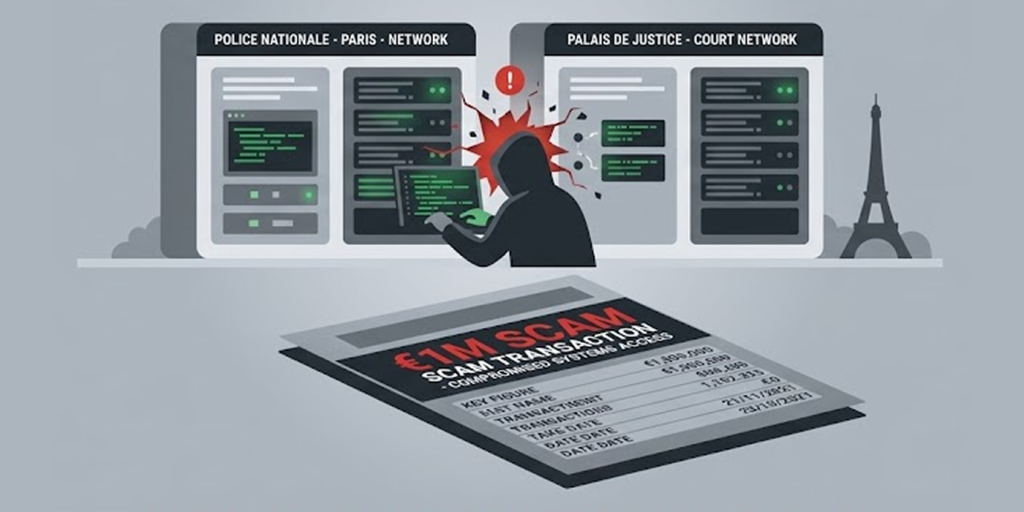
A young man in Paris found a way into police and court computer systems. He then used that access to steal money from notary offices and businesses across France.
Investigators arrested the 25-year-old and charged him with fraud. They also charged him with money laundering as part of an organized group. A judge then ordered him held in custody before trial.
According to the report from Le Parisien, officers described the suspect as a computer engineering graduate. They say the damage could sit somewhere between 150,000 euros and one million euros.
How the Suspect Broke Into Government Systems
The case started with a serious computer weakness. The suspect allegedly found a security gap inside servers used by the police and the courts.
He told investigators he located this flaw himself. He then used it to launch his scam. This access let him use real, unused government email addresses. Those addresses made his messages look completely genuine.
Because of this, victims believed they were truly talking to police officers or court officials. The stolen access gave his scam a level of trust that normal phishing emails rarely achieve.
The case also reflects how phishing operations continue to evolve. In a separate case, Google sued a cybercrime group over an AI-powered phishing operation that allegedly targeted users around the world. The operation shows how criminals can use increasingly convincing techniques to make fraudulent messages harder for victims to recognize.
He Pretended to Be Police Chiefs and Judges
For close to a year, the man allegedly pretended to be different officials. He copied the identities of police commissioners. He also copied judges, and even some bank staff members.
Some of the fake identities he used belonged to prosecutors. Victims got emails or phone calls warning them. The messages claimed police were investigating them over suspicious money. This made people panic and react fast, exactly as the scammer wanted. Targets were told to contact the caller right away to sort things out.
This plan did not stop at individual people. Between May and July 2025, the scam reached out to companies, nonprofit groups, notary offices, and auction houses too. Fake officers and judges contacted these groups directly.
The goal behind these messages was clear. The scammer wanted personal ID documents. He also wanted bank account details and other private information. In many cases, he pushed victims straight into sending bank transfers.
Several notary offices fell for the trick. In one case mentioned in the report, one notary office sent over 88,000 euros to a bank account in Portugal. Staff believed they were sending client funds to a secure escrow account.
Fake Phone Lines Made the Scam Look Real
Emails were not the only tool used here. The scammer also set up fake phone numbers and call systems. These systems made his calls sound like they came from real government offices. Money collected from victims moved into foreign bank accounts. Investigators traced funds landing mostly in Portugal and Spain.
Detectives also found links to another kind of scam. The suspect’s group allegedly ran fake bank advisor calls too. They sent fraudulent text messages that pushed people to call back a fake number. Victims on those calls were then tricked into approving transfers.
The exact total stolen money is still being counted. Based on details from the investigation reported by Le Parisien, the damage sits between 150,000 euros and one million euros right now. Police tracked phone lines and bank accounts tied to the scam messages. This work slowly led investigators straight to the suspect.
Officers finally found and arrested the young man at his mother’s home in Paris. He reportedly tried to hide before police found him. During the arrest, officers seized 4,000 euros in cash. They also took three phones and one computer.
While in custody, the man admitted to the scheme, according to the report. He also claims he gave police full access to his devices and servers also reportedly explained exactly how he broke into the government systems. He said he wanted the flaw fixed for good.
Judges then placed him in pre-trial detention. Investigators are continuing to dig through the case. They now want to find out if anyone else helped him carry out the scam. This case shows how dangerous a single security gap can become. Once someone breaks into trusted government systems, scams built around that access become far more convincing.
By posing as judges and police commissioners, the suspect reportedly managed to fool notary offices and companies alike. The final cost of this scam could reach one million euros. Investigators say the full picture is still coming together, and more people connected to the fraud may still be identified.