
Technology makes life easier, and this convenience has made many depend on it. It has also brought the world together, improving connections over long distances. As technology advances, it becomes an integral part of human life, and while it has many perks, the cons can’t be ignored. One such is how easily people, particularly young folks, get addicted to technology. Young folks don’t mind spending their day on mobile phones or playing games online.
Many can’t stay a second without visiting social media platforms. Research shows that 32% of teenagers are addicted to their smartphones, and 85% of American adults can’t go a day without the Internet. Another problem is the excessive dependence on AI technology.
The list is nearly unending, but the truth is, many have yet to realize how much technology addiction can affect us. These eye-opening technology addiction statistics will reveal shocking facts you probably didn’t know about tech dependence until now. Tag along as we explore them.
Key Technology Addiction Statistics
Internet Addiction Statistics
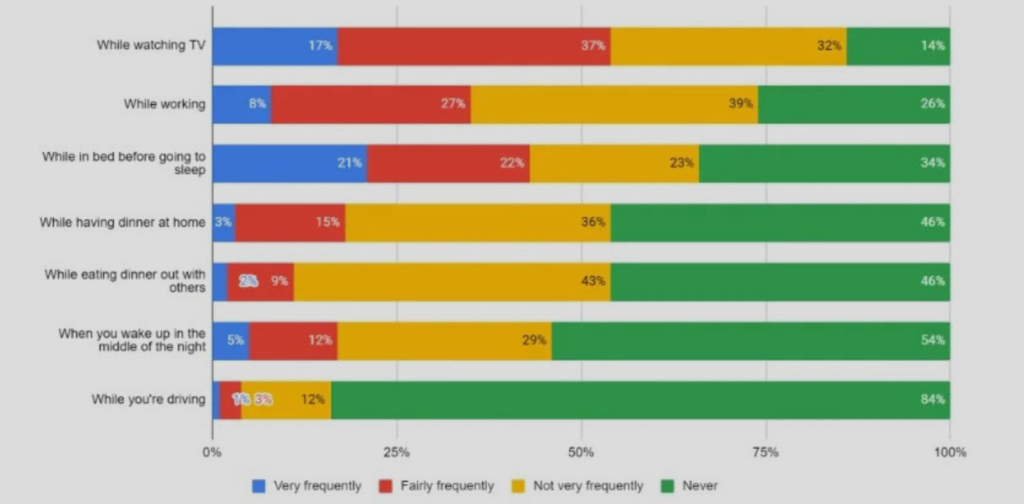
1. During the COVID-19 pandemic, internet addiction rose to 36.7%.
Studies showed that the number of people affected by internet addiction worldwide was only about 1.5% to 8.2% worldwide in 2013. But things changed rapidly after the COVID-19 pandemic kept everyone at home. The Global population depended heavily on the Internet to stay connected and do business at the time. This increased dependence on the Internet led to a 36.7% increase.
2. During the COVID-19 pandemic, internet addiction rose to 36.7%.
Studies showed that the number of people affected by internet addiction worldwide was only about 1.5% to 8.2% worldwide in 2013. But things changed rapidly after the COVID-19 pandemic kept everyone at home. The Global population depended heavily on the Internet to stay connected and do business at the time. This increased dependence on the Internet led to a 36.7% increase.
3. At least 85 out of 100 Americans must be found online every day.
It is even more concerning to know that the majority of Americans cannot spend a day without going online. About 31% of these Americans are almost constantly in cyberspace. Only about 6% of them go online once daily, while the other 48% go online several times a day. However, the number of American adults who don’t use the Internet is just about 7%. A lot of internet users see it as a way to get distracted from any unwanted feelings they have at any moment.
4. 32% of teenagers admit to smartphone addiction.
95% of American teenagers use a smartphone or have access to one. Since it’s common to have a smartphone at a young age, smartphone addiction has become increasingly prevalent.
Smartphone Addiction Statistics
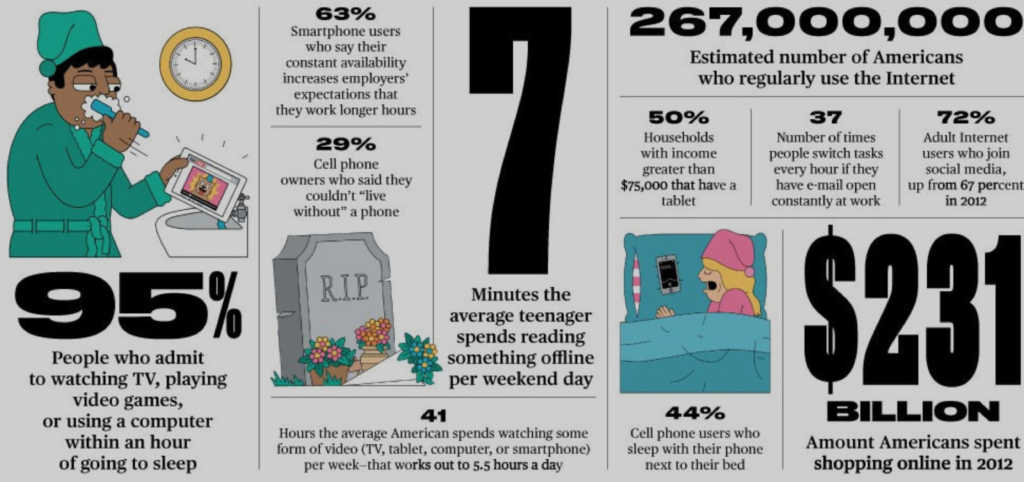
5. 66 out of 100 teenagers start to feel anxious when they are away from their phones.
Every hour, 78% of teenagers check their smartphones, especially when they get notifications from numerous social media platforms. Moreover, it has been found that around 72% of young people feel the urge to respond to messages immediately.
6. Americans go through their phones about 96 times a day.
The average American checks their phones once every 10 minutes. So, they would have checked their phone almost 100 times in a day. The average mobile screen time of Americans is 3 hours and 46 minutes.
7. Smartphone use is responsible for 26% of all car accidents in the US.
The World Health Organization has informed that drivers using mobile phones on duty are four times more likely to get into a car accident. Texting while driving is another big cause of accidents on the road. Not holding the phone and being on call also leads to distracted driving and carries the same risk.
8. 44% of teenagers can’t do without tech.
According to smartphone dependency statistics, young teenagers struggle without the needed technology break. Studies also reveal that 41% of youths in their 20s find it hard without tech. For those people above 40, the dependency reduces; only about 29% of them would struggle without tech. Moreover, younger people find it easy to adopt technology; they have incorporated it deeply into their daily lives. Hence, the over-dependence on it leads them to become addicted.
Technology Addiction Statistics
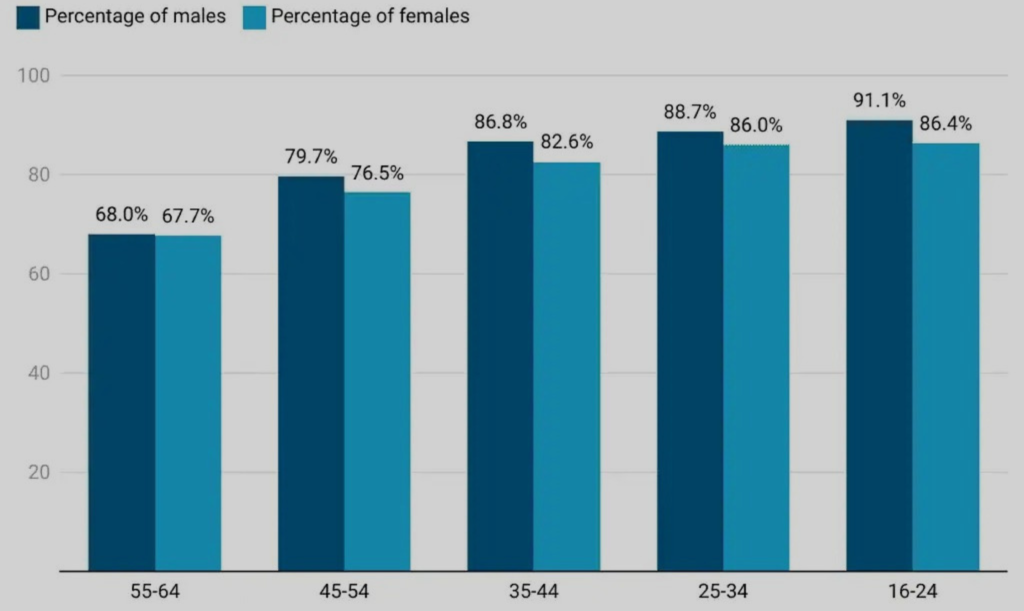
9. Teens in the US spend over seven hours a day staring at a screen.
This value does not include the screen time these teens spend while doing schoolwork, which makes it disturbing. Younger children of about 8-12 years have been seen to spend an average of 4 hours and 44 minutes in front of screens daily.
10. 12% of teenage boys are struggling with video game addiction.
Due to the nature of some video games, they are more suited for young boys. Data shows that 72.4% of active Fortnite players are male. Hence, it is no surprise that 12% of teenage boys are video game addicts. Also, 7% of adolescent girls are addicted to video gaming. And that is challenging for their parents. But regardless of age and gender, game addiction happens to everyone.
11. The average gamer spends more than 8 hours a week playing games.
Of the over 2.7 billion gamers worldwide, the average gamer plays games as long as 8 hours and 27 minutes weekly. Then, one-quarter of these gamers’ population can be found playing at least 12 hours a week. According to the State of Online Gaming, binge gaming grew by 13% in 2021 after a rapid upward trend during the COVID-19 pandemic.
12. 43% of the time, when internet users are awake, they spend it online.
A recent data release on technology shows that people are online an average of 6 hours and 53 minutes daily. An average American stays awake for about 16 hours and is on the Internet for 6 hours. This means 43% of the waking life of these internet users is heavily spent looking at screens. It also means that the 5 billion internet users use over 2 trillion minutes of screen time daily.
Screen Addiction Statistics
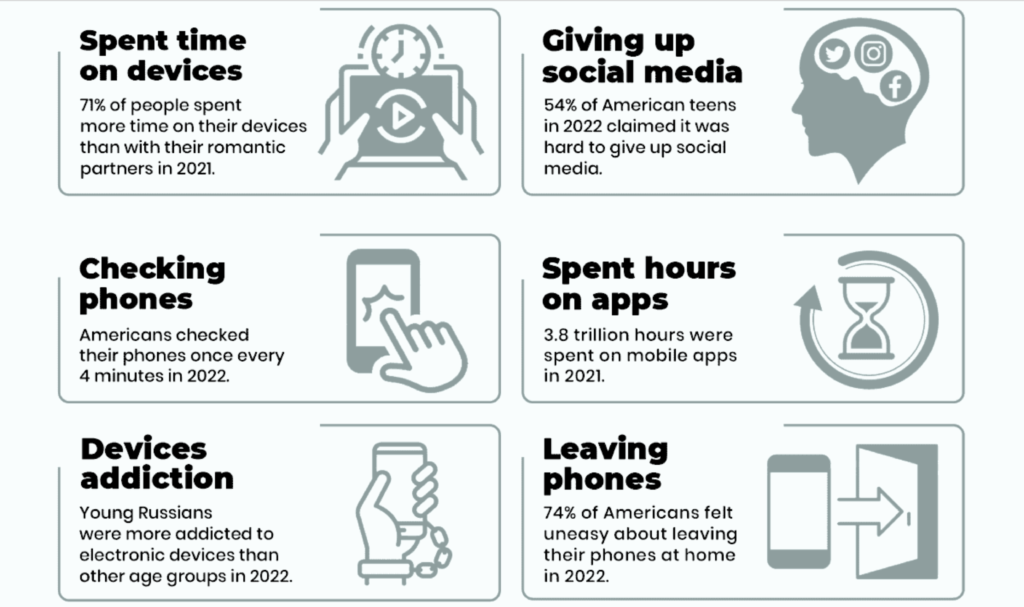
13. With over 4 hours of screen time daily, South Africans are the biggest in desktop screen time.
Every day, South Africans spend approximately 4 hours and 25 minutes of screen time on their computers. Also, it was discovered that most of the country’s population is digital natives who can hardly do without technology. The country after South Africa in screen time is Russia, with 4 hours and 17 minutes daily.
14. Filipinos are active on their mobile devices for about 5.5 hours daily.
Filipino has the highest number of screen time coming from mobile devices worldwide. Filipinos spend approximately 5 hours and 31 minutes daily on their phones. The majority of Filipinos engage more with gaming and social media apps on their phone. The mobile phone is their most preferred method for staying connected with loved ones. Brazil follows next with a mobile screen time of 5 hours and 28 minutes, and then South Africa’s screen time is about 5 hours and 13 minutes.
15. Nearly 40% of people in the US have a social media addiction.
The addiction to social media is strongest in young people between 23 and 38. About 15% of people in this category are completely addicted to social media. Those aged between 18 and 22 are the next category of young people who are social media addicts. Only about 5% of them are completely addicted, while about 40% of them are only slightly addicted. Older people between 55 and 64 are the least addicted to social media. Only about 1% of them are completely addicted to social media. 21% of them agree that they are slightly addicted to social media.
Excessive Smartphone Use Addiction Statistics
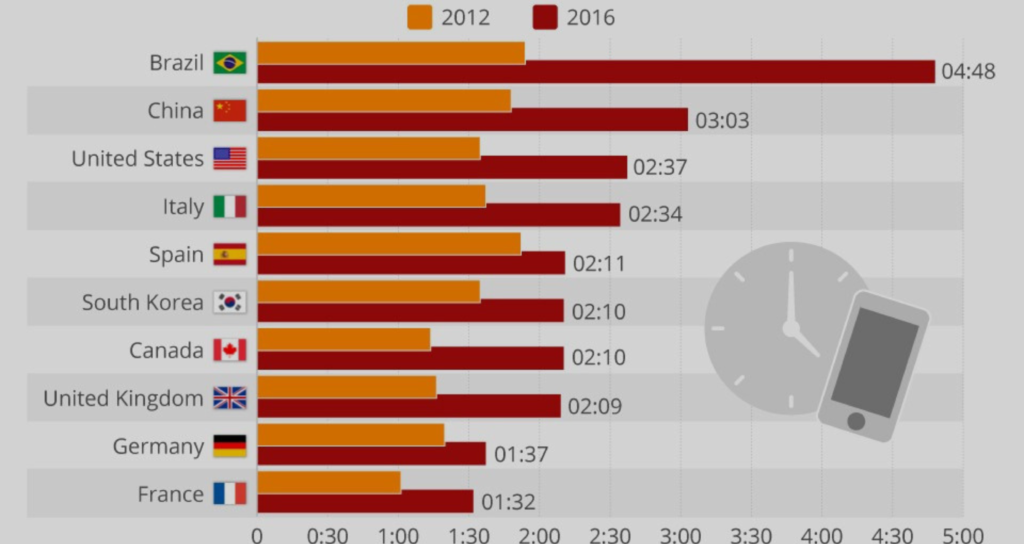
16. 48% of mobile phone users experience nomophobia, the fear of disconnecting from their mobile phones. Therefore, they develop this fear when their phone battery drops to below 20%.
17. The average smartphone user swipes, clicks, or taps their phone about 2,617 times a day.
18. About 50% of respondents to a survey say they feel uneasy about leaving their phones at home when going out.
19. For 56% of married people, reducing phone usage would make their partners happier.
20. 20% of survey respondents on cell phone usage claim they would rather be without shoes for a week than stay away from their phones.
21. While trying to reduce distractions from smartphones, people believe that silencing or turning off their notifications works. Meanwhile, a Penn State study discovered that people frequently check their phones after silencing them.
22. The majority of teenagers check their smartphones once they wake up.
23. About 7% to 10% of people who watch online porn are addicted to it.
24. According to 47% of parents surveyed, they believe their children have a smartphone addiction.
25. 67% of teachers have complained about negative distractions for their students caused by mobile devices.
26. 52% of adolescents sit silently for long periods, facing their smartphones while hanging out with friends.
27. About 33% of teenagers prefer socializing with close friends online to actual people in real life.
28. The average smartphone user unlocks their smartphone about 150 times a day.
29. More than 50% of mobile phone users never let their devices switch off.
30. On most nights, 71% of smartphone users sleep with their phones beside them.
31. Most cell phone users (about 75%) said they have texted at least once while driving.
Teens and Parents Addiction Statistics
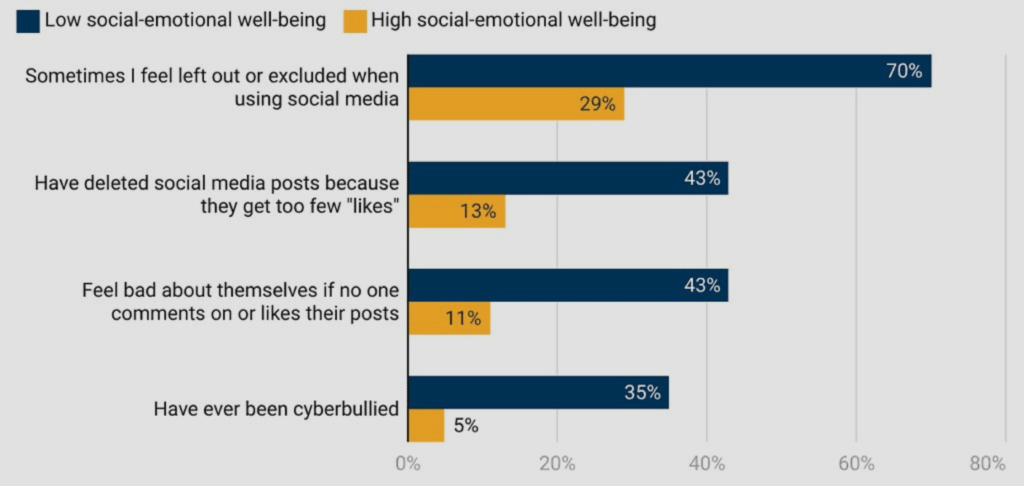
32. In 2026, up to 97% of adults in America own a mobile phone.
33. The number of Americans going online every day is around 85%.
34. Nearly 40% of adults check their mobile phones while in the bathroom.
35. Even on vacation, 44% of adults check their emails for work-related mail.
36. Data collected in 2019 revealed that 86% of smartphone users check their phones when conversing with friends and family.
37. 30% of people message their partner who is in the same house instead of starting a face-to-face conversation.
38. The COVID-19 pandemic led to an increase in internet use and, most especially, addictive use.
39. In a Korean survey, 44.3% of Korean citizens admitted that their cell phone usage increased because of COVID-19.
40. 61% of smartphone users increased their texting significantly during the pandemic.
42. According to an international study, 49% of respondents say their primary reason for using a smartphone was to communicate during COVID-19.
43. 47.2% of those respondents said their primary reason was to read the news. Another 34.6% of them admitted their primary reason was for shopping, while 29% said theirs was watching videos.
Extent of Technology Addiction in 2026
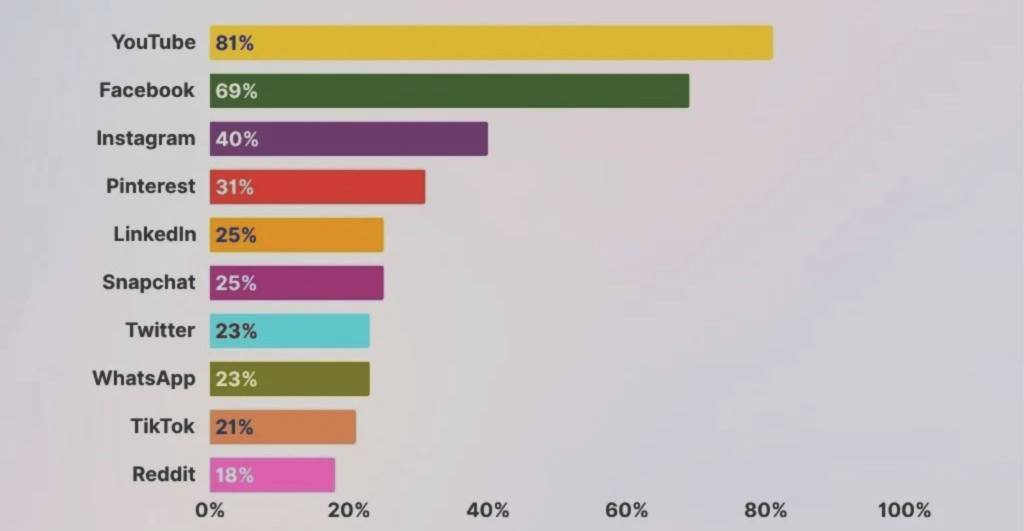
Technology has had a healthy growth curve over the years, proving itself relevant in every aspect of human activity. Due to the things that can be achieved with technology, people have become overly dependent on it. At times, this level of dependence grows and becomes an addiction, and it further becomes a problem for society. Some of the notable issues of tech addiction include;
Technology gives instant gratification and dopamine release, making it harder to break free from the addiction.
Wrapping Up
Technology has proven its benefits, mostly in improving efficiency, communication, and convenience. However, the statistics gathered on technology addiction have shown how things have experienced dramatic changes in recent years. Technology has affected human lives positively and negatively, and over-dependence on its usage has made us addicted. Nonetheless, people can still learn to create a comfortable attachment to technology by limiting the time spent on their smartphones.
FAQs
When a person becomes addicted to technology, it usually affects how their brain produces natural dopamine. It can also lead to increased impulsivity. Other effects of technology addiction on individuals include.
Addiction to screens can cause insomnia, fluctuating weight, vision problems, headaches, anxiety, and back pain.
Over-exposure to technology can make children more socially awkward, shy, withdrawn, or intimidated in real-life situations.
To end cell phone addiction, tracking your data usage helps. You can also set limits for yourself and family members. Removing the apps you spend the most time on would help.
Research shows that early and unsupervised phone use can negatively affect students. It reduces academic achievement by giving students a divided focus, making it harder for them to study effectively.