
Loading internet content is easier and faster when you integrate a content delivery network, a CDN. CDN boosts page load speed and reduces load time by distributing end-to-end content across servers. This text quickly transmits valuable assets for online content, such as images, JavaScript files, HTML pages, and Videos. According to statistics, the growing popularity of content marketing, which raises the demand for traffic optimization tools, has made CDN more popular. Monthly CDN traffic is rising, with websites focusing more on page loading speed.
Popular websites like Amazon, Facebook, and Netflix account channel massive traffic to CDN. As a result, the CDN market worldwide has been predicted to expand from $17.7 billion in 2021 to $81.86 billion by 2030, an annual growth rate of over 18 percent. There’s so much to discover about content delivery networks and their importance for businesses and their websites. So, these top CDN statistics will reveal all the essential facts and trends, providing insights into the growth of the CDN market in the previous and coming years. Let’s plunge in!
Key Statistics
General CDN Statistics
1. Top sites like Facebook, Amazon, and Netflix rely on CDN services to serve customers. As large as 46% of the best 1 million sites use CDN.
2. CDN is gaining more traction, with over 92 million websites implementing its service. Live websites on the content delivery network have gained traction, reaching over 42 million as of early 2024. Of the 42 million, over 4 million domains redirect to live websites.
3. CDNs are used by just 3.4% of all sites on the World Wide Web, with about 12.3 million websites worldwide relying on their service.
4. High-ranking sites are the most significant adopters of CDN service. Almost 50% of the top 10,000 sites use the content delivery network.
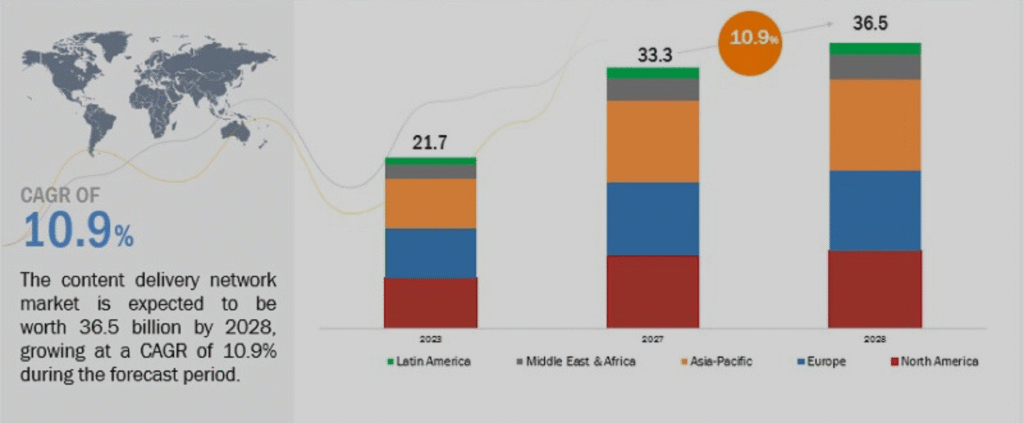
5. Statistics show that the market size of Cloud CDN reached $10.95 billion at the end of 2024 and will grow to $32.43 billion by the end of 2029. It implies a CAGR growth of 24.27% within the time frame.
6. The global CDN market rose to $23.25 billion as of 2023 and is expected to be more than $105.55 billion by the end of 2032. It simply means there will be an 18.31% rise in CAGR.
7. CDN in the United States has risen over the years to reach $5.01 billion at the close of 2023. Growth is expected to continue by 18% to reach $22.22 billion at the end of 2032.
8. North America owes its CDN market growth to the activities in Canada and the United States. The US and Canada are the most critical drivers of North America’s CDN market. Both countries control 36% of the entire market in just 2020.
CDN Growth Statistics
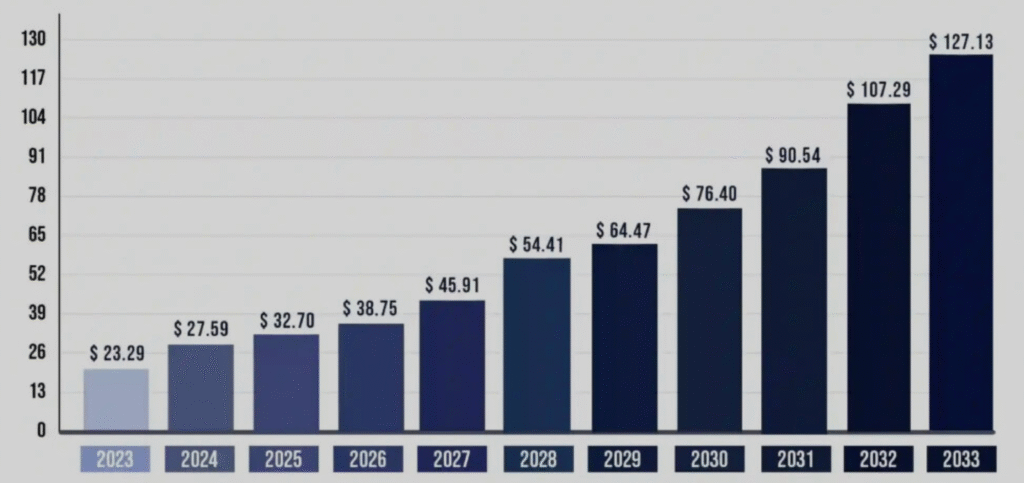
9. The increasing relevance of CDN solutions has not slowed down in recent years. As of 2022, the CDN market was worth approximately $20.7 billion. This will most likely rise by 21.87% CAGR by 2028, which means that the CAGR in 2028 will likely exceed $67.8 billion.
10. More firms, like those in the IT sector, use CDN to boost site performance. Companies in the IT sector worldwide raised $1.688 billion in revenue in 2009 with the help of content delivery services.
11. Global traffic was expected to hit 252 EB every month in 2022. CDN traffic stood at 54 EB every single month as of 2017. This was expected to rise to a monthly Exabyte of 252 at the close of 2020.
12. The Video segment of the CDN industry performed much better than other areas, accounting for a 64.7% share of global revenue in 2022. This resulted from the growing interest in video content, as many sites stepped up their game to meet the demand for better quality and content loading speed.
13. In 2022, CDN received 34% of its revenue from the Asian market. The Chinese and Indian markets made this possible through their activities. Both regions are amongst the fastest-growing CDN consumer markets.
14. Countries in the Middle East, Africa, and South America are not left out of the CDN revolution. They expect to grow CDN with the ongoing digital changes. Other factors like online retailing and e-commerce will drive more traffic toward CDN usage.
15. As of 2012, the average desktop site’s web page size was 803 kb. This was relatively lower on mobile sites, with 386 kb.
16. As an ever-changing place, the world has used the internet more, boasting increased traffic of 30% between 2019 and 2020.
CDN Benefit Statistics

17. Websites using CDN solutions can surely increase trust as they help web applications run seamlessly without a hitch. Sites can work seamlessly, even on some high-traffic days.
18. The CDN solution reduces web page load time by 50% and increases the response speed of servers in use.
19. A CDN is an excellent tool for reducing website costs. It helps website operators slash expenses by reducing the number of trips from the source server and ensuring that the same content is not brought up more than once.
20. Web host providers bill for each data transfer through their services. This means more data transfers will heighten bandwidth costs. Using CDN on every piece of content on a website will slash costs. It does this by handling most of the users’ requests, thereby reducing the number of those that slide toward the source server.
21. Websites are protected against any form of malware attack. Several websites are at the mercy of malware attacks and other diverse threats, so they must adopt measures to minimize risk and vulnerability.
22. A CDN will be helpful in defense against DOS (denial of service) and DDoS (distributed denial of service) attacks. The backdrop of these attacks on websites is slowing down their loading speed. The sites, in the long run, crash due to high traffic. CDN absorbs these large volumes of traffic, keeping the websites safe and moving at an incredible pace.
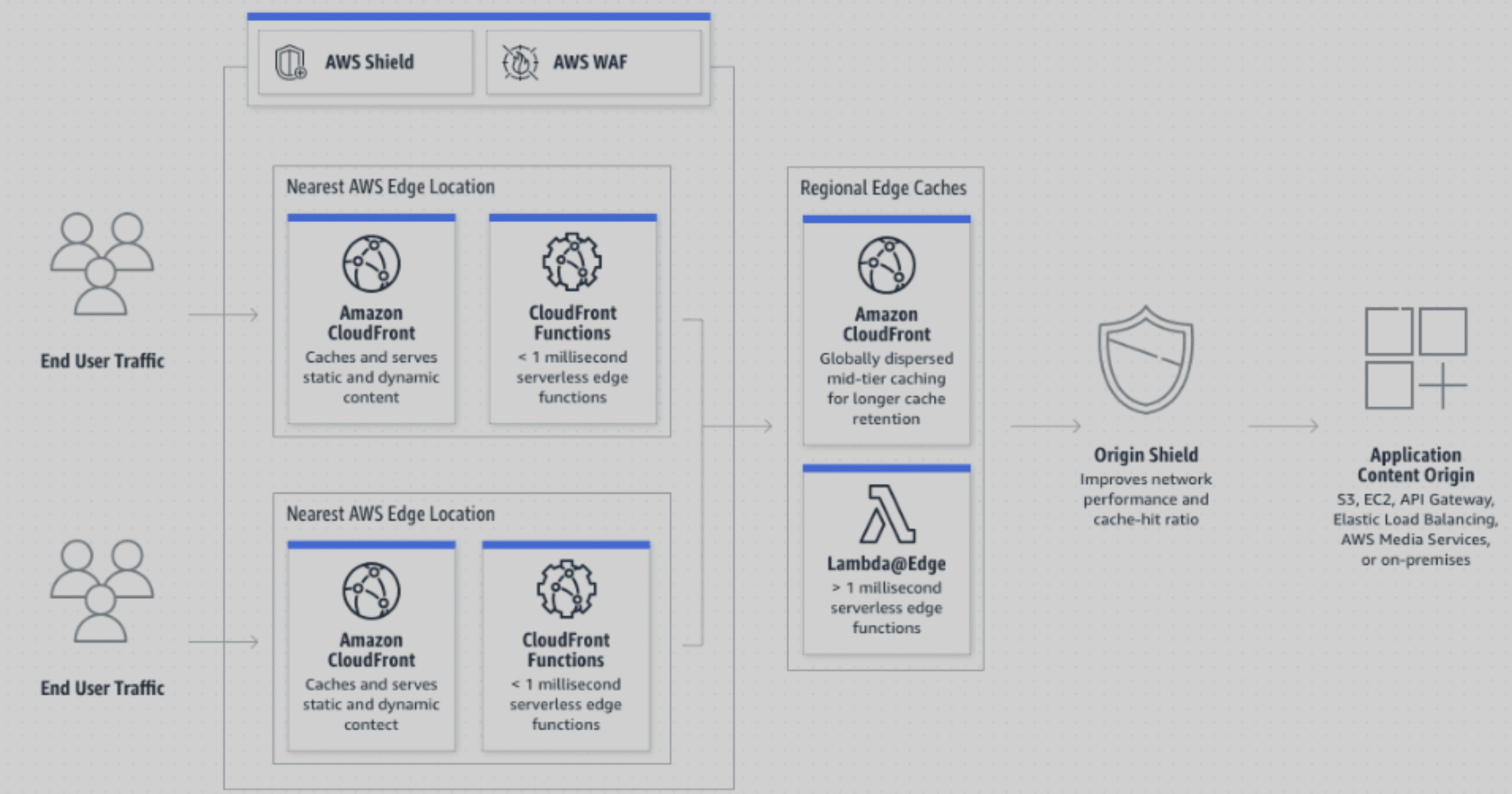
23. CDN takes as much as 60% of the workload from websites’ source servers. The Origin servers are handling a heavy load of users’ requests, causing them to slow down. Integrating a CDN can relieve the source server of up to 60% of its load. The CDN does this by simply handling many users’ traffic requests.
Other CDN Statistics and Facts
24. The global CDN internet traffic data volume as of 2022 was 252 exabytes, a substantial increase from the 190 exabytes recorded in 2021.
25. The content delivery network is divided into various segments: provider type, content type, Solutions, and vertical. Based on user demand, each segment contributes its quota to the growth of the overall network.
26. The provider type is classified into P2P CDN, Traditional CDN, Telco CDN, Cloud CDN, etc.
27. The content type is further grouped into Dynamic and static content.
28. The vertical comprises retail, e-commerce, healthcare, BFSI, tourism and travel, Online gaming, government, and media and entertainment websites.
29. The Solutions Type deals with cloud security, media delivery, and web performance optimization solutions.
30. A study by The Brainy Insights analyzed the CDN market size by provider type. The study found that the traditional CDN provider segment has a market valuation of $4.98 billion as of 2021. TCDN service providers attributed this growth to the increasing demand for content acceleration solutions.
31. The dynamic content CDN segment recorded a market value of $9.94 billion in 2021, while the media delivery solution segment had a value of $7.46 billion.
32. Akamai is the oldest and one of the biggest CDN providers in the world. Its services include improving content delivery, web performance ratings, and online security. Others, like Amazon Web Services, Cloudflare, and Fastly, offer scalable, seamless services to their users.
33. North America’s CDN market growth stems from massive R&D investments and updated technology. Other factors like increased internet usage, OTT media, and 4K video content have fueled the use of CDN services.
34. Many web pages (up to 64%) use images to communicate their services.
Conclusion
The speed of delivery determines the strength of any website in the online space. Users’ ability to keep up with website pages depends on page loading speed, quality, and web security. Websites have come to discover the efficiency that CDN offers to its clients. CDN seamlessly handles web traffic, security, and cost. The success story of websites using its service keeps growing each year. Mobile app developers, gamers, IT firms, and others use CDN for a faster web experience. One exciting use of CDN is its availability in several formats. This means that users can access content in any way they prefer. The speed of content delivery makes CDN so much better than using your origin website server.
FAQs
Websites that use CDN have faster transactions and better online experience.
Up to 46% of the best 1 million sites use a CDN service to scale up their content.
Using CDN aids in transferring data and fast-loading web content in Javascript, images, videos, and HTML.
Optimizing the ratio of cache hits will surely increase your CDN provider performance. Simply using dedicated cache keys does this. The effect is that cloud CDN does not take out the cache at will.
Akamai and others like Cloudflare, Fastly, and Amazon CloudFront provide the best CDN services.