
- A German court has held Google accountable for inaccurate information its AI Overviews feature generated about two publishers.
- The court rejected Google’s disclaimer defense, ruling that companies cannot transfer responsibility to users when their AI causes harm.
- The decision has reignited a global debate over AI accountability and the obligations technology companies carry for machine-generated errors.
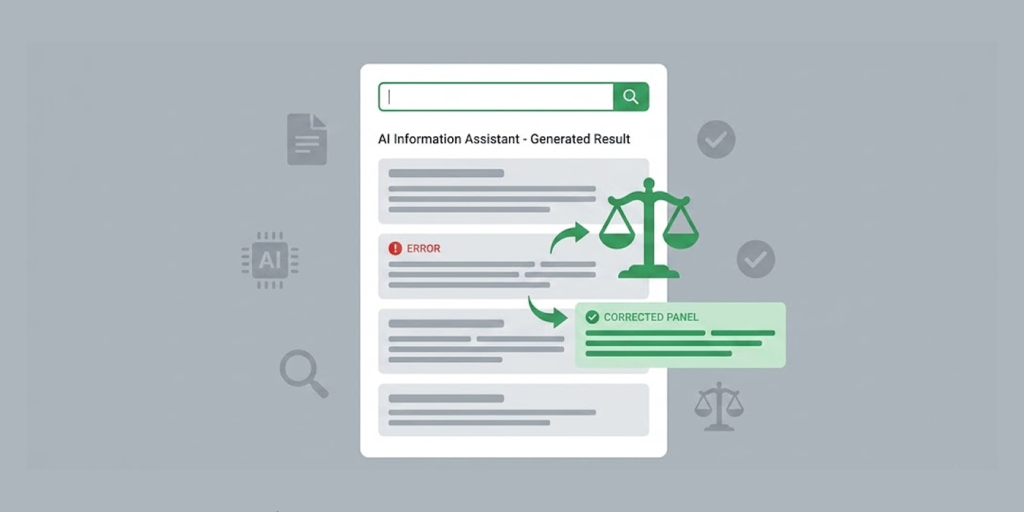
A German court has ruled that Google bears legal responsibility for false information its AI Overviews feature generated about two publishers, marking one of the most significant legal challenges yet to how artificial intelligence companies answer for errors their systems produce.
The two publishers at the center of the case claimed Google’s AI-generated search summaries incorrectly linked them to scams and suspicious business activity.
Reports shared by Pirate Nation on X noted that the disputed claims did not appear in any of the underlying sources the AI system drew from, raising serious questions about how the technology produced that information at all.
Google argued that users already receive warnings that AI-generated content can contain mistakes and that readers should independently verify important claims.
The court rejected that defense, ruling that technology companies cannot transfer responsibility to users when their AI systems generate false and harmful content.
The judges determined that when an AI system delivers an answer, the company operating that system carries the responsibility for inaccuracies that cause real harm.
The ruling arrives as AI-generated search summaries spread rapidly across the internet, with major technology firms embedding generative AI directly into search engines, productivity tools, and consumer applications.
Court Rejects Google’s Disclaimer Defense
The case has placed a sharp spotlight on a growing legal argument: can warning labels protect companies from liability when their AI systems spread false information?
Technology companies have largely relied on disclaimers to manage user expectations around AI errors. Critics have long argued, however, that users treat AI-generated answers as authoritative, particularly when those answers appear prominently at the top of search results.
The German court sided with that argument. The judges concluded that a warning label does not shield a company from accountability when its technology generates and distributes false claims about identifiable people or businesses.
The ruling could carry significant weight beyond Germany, particularly as European regulators continue building out AI governance frameworks under the EU AI Act and related digital legislation. Legal experts have grown increasingly vocal about the risk that AI hallucinations and defamatory outputs could become major sources of litigation as global adoption scales.
Google is also facing legal pressure in the United States. The US government is taking on Google’s ad tech monopoly in an antitrust trial, showing the company is under scrutiny on multiple fronts.
Social Media Reacts to the Decision
The ruling sparked an intense debate across X, with users divided over whether AI companies should bear responsibility for every error their systems produce.
Some users welcomed the decision. One user, @AnShiffer, drew a clear distinction between choosing to use a chatbot and receiving AI-generated information through a standard search engine.
The user argued that choosing an AI tool means accepting imperfect results, but receiving AI-generated false information at the top of an ordinary search page is an entirely different matter, and the responsibility belongs to Google.
Others raised a practical concern. A user posting under the handle “Gege’s Stick Artist” argued that vulnerable groups (including senior users and children) may not recognize when AI-generated content is wrong, and that heavy marketing around AI capabilities pushes people to over-trust machine-generated responses.
Not everyone agreed. User @Lee_Vertisce compared the ruling to holding a GPS provider responsible when a driver follows wrong directions, arguing the same logic leads to absurd conclusions. Another user, @bitslix, questioned whether the ruling could extend liability to bugs found in AI-generated code, warning of serious unintended consequences for developers.
Innovation Concerns Grow Among Critics
Some commenters expressed worry that the decision could slow AI development across Europe.
One user argued that Germany risks falling behind in AI competitiveness if companies face heavy legal exposure for machine-generated mistakes. Another commenter, Marco Quinten (@rawquinten), described the potential liability as extreme and questioned whether companies would continue deploying advanced AI products in jurisdictions with strict accountability standards.
Others saw the ruling as a natural consequence of arguments AI companies have made themselves. User @industrialpc noted that AI developers have often compared their systems’ learning processes to those of humans. If courts accept that framing, the user argued, companies may also need to accept the same level of responsibility for harmful outputs that a human publisher would carry.
The German ruling does not settle the broader debate, but it signals clearly that disclaimers alone may no longer protect AI companies when their systems produce information that causes real-world harm.