
- Telegram’s macOS beta reportedly contains a test AI agent that supports OpenAI, Anthropic, Google, xAI and OpenRouter.
- Users would add their own API keys, set up several providers and switch between them.
- Security questions remain over API key handling, and Telegram has not shared a public release date.
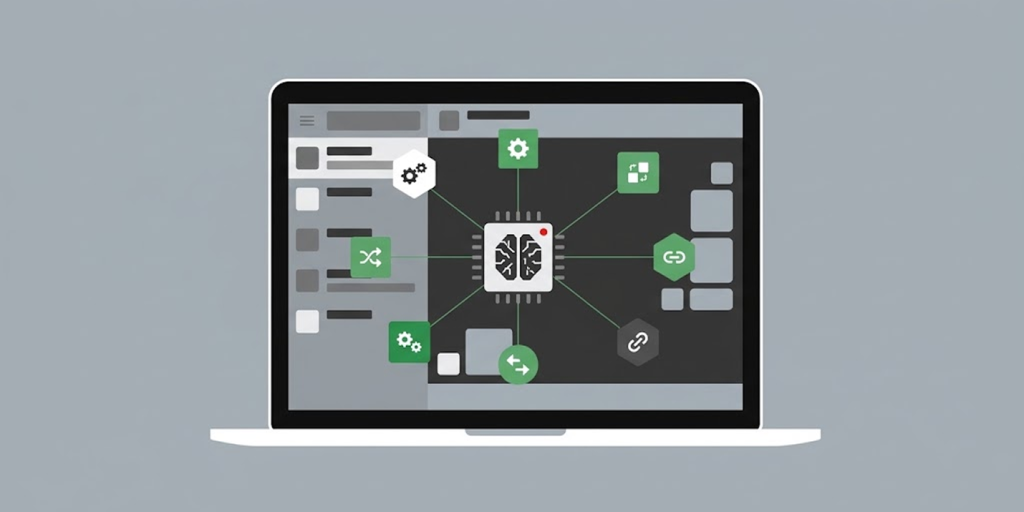
Telegram may be building an AI agent inside its chat app. A test version appears in the macOS beta, version 13.1.0. The beta-tracking channel teleLakel shared the discovery. Reports say the find points to a tool that connects popular AI services to Telegram. Users would no longer need separate third-party bots. They could reach several AI services directly through the messaging platform.
The find matters because Telegram is a widely used messaging app. Any AI tool inside it could reach a very large audience. Beta versions are early builds, so their features can still change. Nobody has confirmed what this tool will finally do. Telegram has not announced a release date either.
It has also explored expanding its ecosystem beyond messaging, including applying for the .gram domain to give users their own web addresses.
Telegram Beta Shows Support for Five AI Providers
The test lists five providers: OpenAI, Anthropic, Google, xAI and OpenRouter. A provider is a company that offers AI models. Each one links to a well-known AI service. OpenAI matches ChatGPT, Anthropic matches Claude, Google matches Gemini, and xAI matches Grok. OpenRouter works differently. It gives access to models from several AI companies.
According to the beta findings, users would bring their own API keys. An API key is a secret code that lets someone use an AI service. People could add many providers at once. They could then switch between them using the proposed @agent tool. Think of it like a phone with many contacts. Users would pick which AI service to talk to.
Reports say Telegram’s servers control the provider list. That setup could let the company add new AI services without an app update. The beta code also hints at a special agent bot. Users could manage their connections through that bot. The findings say Telegram would store the connection dates. It would also keep the last four characters of each key. Settings would sync across devices, so they would look the same everywhere a user signs in.
Telegram’s bot documentation already describes support for AI agents. That page covers bots in general, though. It does not confirm the exact tool found in the macOS beta. Only the beta findings describe this specific feature.
API Key Handling Raises Security Questions
One detail stands out. According to the beta findings, API keys pass through Telegram’s servers. This happens at two points. The first is when users connect a service. The second is when the system checks that a key works.
A key works a bit like a house key. It can authorize access to an AI service. It can also cost money, depending on its permissions and use. So the security rules around keys matter a lot. Users would need clear answers. Who can access the stored keys? How does Telegram protect them? How can users remove a key?
The discovery does not show that Telegram suffered a breach. It also does not prove the feature is unsafe. Nothing confirms that the agent could read private messages, group chats or other account functions. Those questions remain open. The feature is not widely available, so its final permissions are unknown. Its data rules are also unknown.
X Users Debate Telegram’s AI Plans
The discovery sparked talks on X. The posts show a split. Some users worry about safety. Others see business gains and new features. They discussed the chances and risks of placing AI inside a popular messaging app.
Nils Groove (@nilsgroove) focused on the key issue. The user said API keys passing through Telegram’s servers will get close attention. Security teams, the user added, would review that detail twice.
Tourist (@JHighmo) looked at competition. The user argued that Telegram could become a major channel for spreading AI tools. People could choose their models inside an app they already use. In that view, the convenience gives Telegram a strong position in how AI tools reach everyday users.
PeritumAI (@peritumAI) raised a different concern. The user warned that AI inside Telegram could create new risks. Those risks grow if people treat their conversations as material for AI prompts.
Prabahan Kalita (@prabahankalita) questioned how deep the feature would go. The user asked whether it would support real automation. Examples included external webhooks, tool calling and access to specific channel content. A webhook sends data from one service to another automatically. Tool calling lets an AI use other tools to finish a task.
Mohammad Vazin (@mohammadvazin) shared a similar view. The user said the main issue is which conversations an agent can read. The user also wants people to see what information the agent accessed. That would show users exactly what the agent touched. These are user opinions. They do not confirm what the feature can do.
For now, Telegram’s built-in AI agent remains in beta. It is not a confirmed public launch. So far, the public knows only what the beta code suggests. Its value will depend on more than the models it supports. Clear permissions will matter. So will safe handling of credentials. Users also need control over their data.