
- Telegram applied for the .gram generic top-level domain to offer custom web addresses to over one billion platform users.
- The feature would enable users to create and host interactive websites instantly using a single text prompt inside the app.
- Regulators at ICANN must complete extensive technical and legal reviews before delegating the requested domain extension.
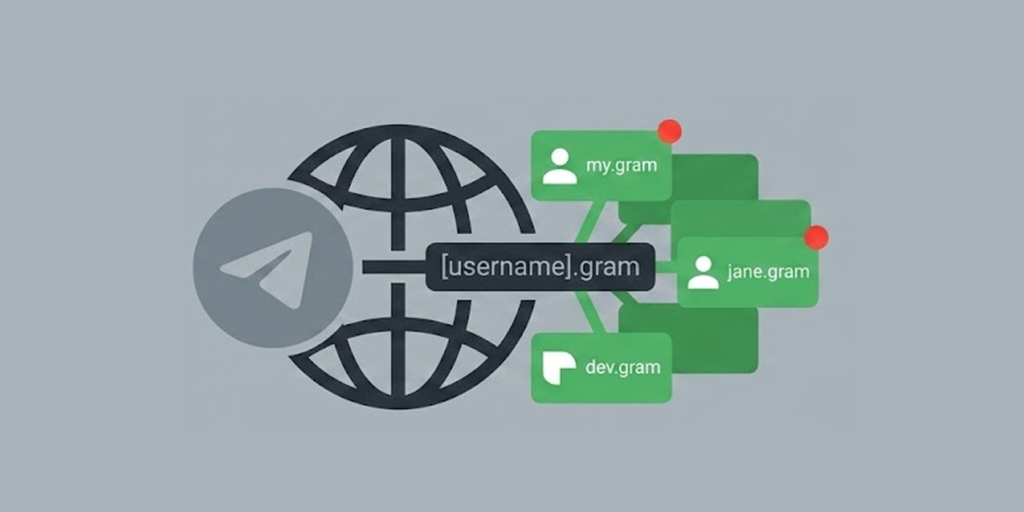
Messaging giant Telegram has officially submitted an application to manage its own dedicated domain zone on the internet. Platform founder Pavel Durov shared the announcement across public social media channels to outline the newest project of the company.
The ambitious proposal targets a custom top-level domain string managed directly through international web naming authorities. If regulators approve the application, over one billion registered account holders could soon claim personal web addresses.
Transforming User Handles into Personal Websites
The proposed top-level domain would allow individuals to convert standard chat handles into functional web addresses. For instance, a user account operating under a specific handle would automatically control a corresponding second-level domain name.
Additionally, the planned system will let individuals build and host interactive web pages directly on the platform network. Users can generate customized digital sites instantly by submitting a single text prompt into the system interface.
This integration removes traditional technical barriers associated with managing complex external web hosting accounts. Thus, owners of small businesses and content creators no longer have to invest money in separate hosting services.
In addition, direct hosting service expands the platform from messaging only to an entire digital ecosystem. Instant web creation helps users not only to create and manage their portfolios but also sell goods and services directly on the platform.
Navigating Regulatory Approval and ICANN Procedures
Acquiring a dedicated top-level domain is impossible without receiving approval from ICANN – Internet Corporation for Assigned Names and Numbers. Recently, the organization finished accepting applications for generic top-level domains.
Meanwhile, obtaining this approval involves a tough workflow, it requires a comprehensive technical, financial, and legal review through several international regulatory committees. The evaluation process requires significant financial commitments and can take several months or years to complete officially.
Regulators examine potential string conflicts between competing organizations seeking similar generic domain endings. Furthermore, external parties can raise formal objections during public review phases before regulatory boards issue final delegation approvals.
If regulators grant the application, Telegram will operate as the primary registry authority for the entire domain zone. Operating a primary registry grants total control over domain allocation policies, technical routing, and underlying database security rules.
Moreover, managing an independent registry protects platform services from external domain registry disruptions. Operating private infrastructure prevents sudden service suspensions and secures consistent network availability for millions of active global users.
The consequences of such outages can be severe. Delta Air Lines faced a federal investigation after a July 2024 CrowdStrike outage caused approximately 7,000 flight cancellations and left the airline struggling to recover for days. The Department of Transportation closed its probe without penalties in June 2026 after determining the airline provided prompt refunds and adequate customer assistance.
Expanding Platform Capabilities and Ecosystem Integration
Launching the individual domain entity is in line with the efforts to upgrade the messaging service into an ultimate multi-functional application. The network already supports automated mini applications, integrated digital wallets, public channels, and complex software bots.
However, personal web addresses will deepen integration across existing decentralized storage networks and digital identity systems. Users will gain unified online identities that seamlessly bridge private social messaging with public website hosting.
Furthermore, integrating prompt-driven website builders suggests the platform plans to deploy advanced artificial intelligence generation tools internally. By just providing clear descriptions of the preferred designs, structures, or interactive functions, users can create fully functioning web pages in no time.
This style of automated publication may change the ways in which independent authors connect with the world. Also, companies can deal with customer questions, make online payments, and edit the public web pages using one and the same app.
At the same time, working with their own websites strengthens the loyal attitude of customers towards them and makes them use their platform only. Digital platforms always try to attract their users by providing them with free web hosting services.
Industry analysts will monitor upcoming regulatory disclosures to verify whether competing tech firms submitted conflicting claims for the same domain string. Ultimately, winning approval would mark a major milestone in turning a popular chat client into a comprehensive internet host.