
- Palo Alto Networks has revealed CVE-2026-0310, an out-of-bounds bug in XML processing, enabling unfettered code execution on PA-Series firewalls.
- The vulnerability allows unauthorized access to all PA-Series hardware, exposes VM-Series firewalls to denial-of-service attacks, and also affects Panorama management servers.
- The firm emphasizes that there is no workaround, so administrators should restrict management to trusted IPs and patch their software immediately, even though there are no active attacks.
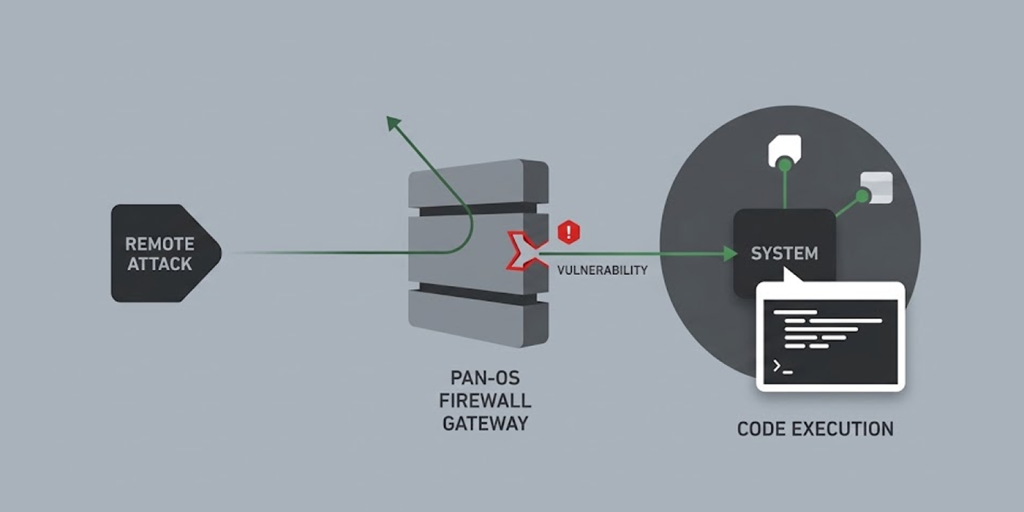
In a recent announcement, Palo Alto Networks has disclosed a significant process vulnerability that exists in the PAN-OS software system. The vulnerability – which has been assigned the identifier CVE-2026-0310, could give hackers the ability to attack perimeter systems remotely.
The bug exists specifically within internal XML processing functionality across several supported system releases. Security teams can now download official software updates to protect enterprise firewall devices.
Out-of-Bounds Memory Handling Creates Unauthenticated Execution Risk
The new vulnerability arises from an out-of-bounds writing condition identified as CWE-787. Software components mishandle structured input data during routine parsing operations across network interfaces. The hacker does not need any special privileges to send malicious data across any targeted network.
Consequently, an attacker can trigger a buffer overflow by transmitting malformed XML requests directly to exposed endpoints. The attack path reaches both management web interfaces and active data-plane interfaces without requiring user interaction. On vulnerable PA-Series hardware firewalls, this memory corruption enables complete remote code execution.
The resulting process runs with root privileges across affected physical appliances. Root access grants total operational control over the underlying firewall operating system. Therefore, bad actors gaining root access can bypass security policies and compromise connected internal networks.
Furthermore, security scoring systems rate the underlying CVSS base metric at 9.2 for hardware deployments. Palo Alto Networks has assigned its highest remediation urgency rating to the issue. The vendor discovered the issue through internal code reviews rather than external breach incidents.
Platform Breakdown and Differing System Impact Profiles
Regarding overall operational risks, various types of platform implementations are likely to differ significantly from one another. Physical PA-Series hardware firewall devices are at greatest risk from root exploit threats. If attackers successfully exploit hardware firewall devices, they can modify traffic policies or obtain confidential configuration documents.
On the contrary, virtualized VM-Series firewalls can see a different impact in the case of the same attacking vectors. The destructive XML attack forces virtual machines into denial-of-service mode constantly rather than executing the code. Although a system crash can interrupt traffic inspection, it will stop any illegal access to the host file system.
In addition, cloud-managed environments show a substantially lower exploitation risk under normal operational conditions. Products like Prisma Access and Cloud NGFW carry lower overall risk ratings because external network paths remain restricted. These cloud platforms require authenticated user access, effectively blocking direct outside exploitation attempts.
However, centralized management server instances running Panorama software remain fully vulnerable to incoming network traffic. Compromising a central management appliance exposes administrative configurations across an entire enterprise network fleet. Thus, system administrators managing multi-site firewalls must treat central management software updates as a primary defense priority.
Absolute Lack of Active Exploitation and Workaround Options
Significantly, threat monitoring teams see currently no indications of exploitation of this vulnerability. Palo Alto Networks has verified that attackers have not yet used this particular flaw. Security teams should view this disclosure as a planned maintenance procedure rather than an urgent response.
Other vendors have also recently patched serious vulnerabilities that could expose users to code execution risks. Microsoft, for example, fixed a Windows BitLocker vulnerability that could enable attackers to execute code, reinforcing the importance of applying security updates before attackers can exploit known flaws.
Nevertheless, software maintainers state that no temporary technical workaround exists for unpatched systems. Administrators cannot disable specific XML settings to block potential exploit payloads without breaking core administrative features. Installing official maintenance releases provides the only complete resolution for affected device fleets.
Accordingly, enterprise security teams must plan immediate maintenance windows to deploy updated software builds. Restricting administrative management interfaces to trusted internal IP addresses provides essential temporary network isolation. Placing management access behind jump hosts limits external exposure while administrators prepare official software upgrades.
Besides network isolation, security operations centers should monitor system logs for unusual traffic patterns reaching management ports. Detecting malformed XML payloads early prevents unexpected appliance restarts across critical corporate perimeters. Organizational defense guidelines stress that securing perimeter devices prevents lateral movement inside internal business networks.
Strategic Patch Management and Perimeter Security Hygiene
Perimeter security appliances occupy high-value trust boundaries between external internet connections and private internal networks. When a core firewall vulnerability permits unauthenticated root execution, attackers can pivot easily into internal servers. Therefore, network administrators must maintain strict patch management schedules across all edge hardware components.
Additionally, organizations should audit every active firewall management interface to block direct public internet exposure. Dedicated jump boxes and encrypted virtual private networks should safeguard administrative connections at all times. Network engineering teams must continuously verify that data-plane interfaces block administrative traffic by default.
Furthermore, IT supervisors are expected to review vendor notices keenly so they can detect any new memory-related notification quickly. Palo Alto Networks makes it easier for users to understand how to carry out software updates without having an impact on their networking performance. Current organizations using outdated PAN-OS software must start using upgraded versions right away.
Cyber threat intelligence groups recommend system audits right after completing any software update. Verifying administrator accounts helps to ensure that no illegal accounts have been created prior to the introduction of the update. Continuous application of digital hygiene secures any important infrastructure from the damage caused by new zero-day vulnerabilities.