
- AI has made phishing emails six times more effective, with click rates jumping from 12 percent to 54 percent.
- Stolen bank logins sell for as little as $200 on criminal marketplaces, while corporate access goes for thousands.
- Most companies take over 200 days to even notice a credential-based breach.
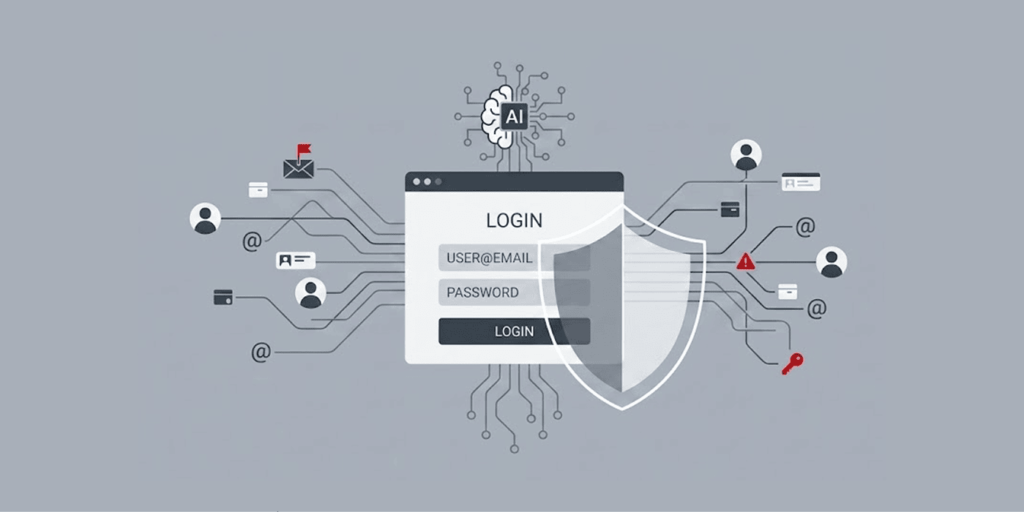
Artificial intelligence and the dark web have turned cybercrime into a factory line. This World Password Day, security researchers are sounding the alarm loud and clear.
Your login details are already for sale somewhere. Passwords cannot protect you anymore, because hackers no longer bother to crack anything. They are simply buying them, logging in, and helping themselves.
The Underground Marketplace has moved
Security researchers say the game has changed completely. Attackers don’t need to hack their way in.
They just buy your password and walk through the front door. The 2025/2026 Dark Web Price Index from Privacy Affairs and DeepStrike shows exactly what your data costs. A stolen Facebook account goes for about.
Hackers can purchase a Facebook account for as little as $45. What about a Gmail account? That goes for $60 to $65. Then there’s verified bank logins, which cost anywhere between $200 and $1,170. Corporate network access sold by Initial Access Brokers averages $2,700 per entry, whereas high-privilege admin credentials sell for over $113,000.
The marketplace has largely left the dark web. Criminals now trade openly on private Telegram channels. Automated transaction bots speed up every deal.
Even novice hackers can get started easily. Top infostealer malware like LummaC2 and RedLine costs just $100 to $1,024 per month. That’s a subscription for mass credential harvesting.
Your Habits Make It Worse
Here is where we hurt ourselves the most. Research shows more than 9 out of 10 people reuse passwords across two or more accounts. Verizon looked into data breaches last year. Their findings? Out of 10 passwords, only 3 meet the National Institute of Standards and Technology complexity rules.
One breach at one site cascades everywhere instantly. Hackers use automated credential stuffing. They test your stolen password on hundreds of platforms in seconds.
AI Inside Companies Creates New Dangers
Generative AI tools have opened a dangerous new window. A recent LayerX Browser Security Report found that nearly half of employees actively use AI tools at work. Here is the kicker. 77 percent of those users paste company data directly into AI prompts.
Check Point Research tracked this in March. Of every 28 GenAI prompts in enterprise environments, one prompt posed a high risk of sensitive data leakage. That affects 9 out of 10 organizations that use GenAI tools regularly. You are feeding your own secrets to the machine.
Phishing Gets a Precision Upgrade
AI has transformed phishing into a custom-made industry. Personalized Phishing as a Service kits sell for under $100 per month on Telegram.
A recent Brightside AI study reveals the terrifying effectiveness. AI-generated phishing emails achieve click rates up to 54 percent. Conventional phishing only manages about 12 percent.
Deepfake technology makes everything worse. Onfido’s Identity Fraud Report recorded a 3,000 percent increase in deepfake incidents.
One real-world case shows the damage. Cybercriminals used a fabricated video of senior executives. They stole $25.6 million from engineering firm Arup in a single operation.
Detection Takes Too Long
The IBM Cost of a Data Breach Report exposes a critical gap. Credential-based breaches take an average of 246 days to identify and contain.
Ransomware operators move within hours of getting your password. Beazley Security’s numbers from Q3 of 2025 say nearly half of all ransomware attacks started with stolen VPN logins. It’s like the criminals just bought login credentials off some sketchy corner of the web and let themselves inside, no alarms tripped.
What You Can Actually Do
Security experts are clear about what needs to happen. The password era needs to end. And the first step is moving to passwordless FIDO2 passkeys. These are much harder to steal or buy. They tie authentication to a specific device rather than a string of characters.
Organizations should combine Endpoint Detection and Response tools with Identity Threat Detection and Response under a zero-trust model. Nothing and nobody gets trusted by default.
Browser-level security controls should block employees from pasting sensitive data into AI tools. It sounds small, but the data leakage problem is real and growing. Run continuous dark web and Telegram monitoring.
Intercept those traded logins before ransomware affiliates buy them. Because these days, your password is not a shield anymore. It is an invitation.