
- Former CEO, Adam Young and Ex-CSO Harrison Gevirtz, both have admitted to knowingly concealing the activities of a computer scheme that deceived victims using pop-up messages to advertise fraudulent computer repairs.
- The executives knew about the fraud for six years and advised customers on techniques to avoid complaints and the prevention of account termination, instead of reporting the schemes to law enforcement.
- Reports reveal that tech-support scams drained $2.1 billion from Americans last year – with the investigation also convicting five India-based fraudsters and revealing that the defendants operated their own fraudulent call center in Tunisia.
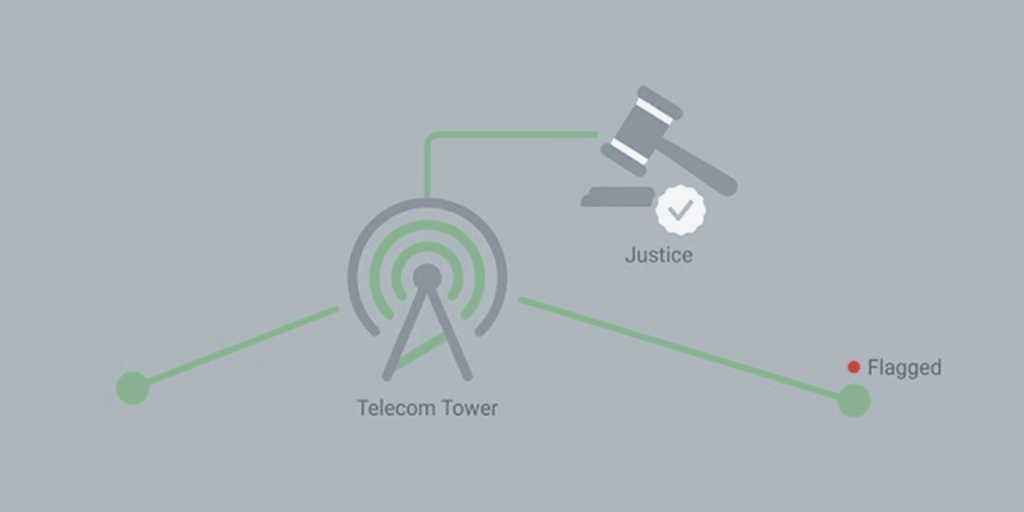
Two senior executives of a business have admitted they operated a company that provided services to tech-support fraudsters. The scheme targeted victims across the United States and internationally, defrauding millions of dollars from vulnerable individuals.
Adam Young, a former CEO of this business in Miami, Florida, and Harrison Gevirtz, a former CSO for the same company in Las Vegas, Nevada, plead guilty to running a telecommunications business that provided telephone numbers to customers involved in tech support fraud schemes. They provided number sets, call routing, call tracking, and call forwarding services to their customers.
As part of their guilty plea, Adam Young and Harrison Gevirtz also plead guilty to misprision of a federal felony, or failure to notify authorities of the existence of that felony.
On June 16, 2026, according to the US Sentencing Guidelines and other statutory factors, a federal district court judge will impose a sentence upon them. The investigation of this company began in 2020 and resulted in the conviction of five different individuals, based out of India, who were telemarketing fraudsters, as well as one former employee of this call routing company.
Executives Knew About Fraud and Failed to Report It
From approximately 2016 through 2022, Young, Gevirtz, and others knew that some of their customers were engaged in tech-support fraud schemes. The schemes utilized false pop-up messages to persuade computer users that their devices had become infected with viruses or malware.
Victims who saw these alerts received instructions to take certain immediate actions – including to call a phone number displayed in the pop-up message. Call centers operating from India answered these calls and persuaded victims to pay hundreds of dollars for technical-support services that are either unnecessary or completely fictitious.
Real technical issues can be just as confusing. Pixel phone users are experiencing eSIM problems that force frequent restarts, the kind of legitimate frustration scammers love to exploit with fake tech support offers.
In many cases, call center representatives remotely accessed users’ computer systems and retrieved financial and personal details.
From 2017 through April 2022, after learning about their customers’ fraudulent activities, Young and Gevirtz failed to report the schemes to law enforcement officials. Court documents show that the defendants received many inquiries and complaints from telephone service providers and law enforcement agencies about customers engaged in tech-support fraud.
Despite this knowledge, the executives advised some customers about techniques to avoid complaints from fraud victims and prevent account termination. They also assisted these customers in buying and selling fraudulent calls among themselves.
Investigation Revealed Call Center Operations in Tunisia
The investigation further revealed that India-based call centers used Young and Gevirtz’s business to route their tech fraud scheme calls. In some instances, the executives advised those fraudsters on methods intended to reduce complaints and prevent account terminations.
Young and Gevirtz themselves owned and operated a call center in Tunisia from 2016 through April 2022. Some employees at that call center engaged in tech-support fraud as well. The defendants also directed their own employees to promote the company’s services to customers involved in fraudulent activities.
The investigation led to the conviction of Indian citizens Chirag Sachdeva, Sahil Narang, Manish Kumar, and Abrar Anjum for charges related to telemarketing fraud schemes based in India. The schemes targeted and defrauded Americans of millions of dollars, with many victims being older or otherwise vulnerable to fraud schemes.
Also, the investigation contributed to the conviction of another person, Jagmeet Singh Virk, in the US District Court for the Northern District of California.
FBI Warns Tech-Support Fraud Costs Americans Billions
The FBI’s Boston Division investigated the case. Special Agent in Charge Ted E. Docks stated that the executives willfully profited from telemarketing and tech-support scammers who preyed on the older and vulnerable. The scammers create a huge damage to many, they drain victims of their life savings and peace of mind.
Behind each fraudulent call stood a real individual left humiliated, frightened, or financially shattered. Tech-support fraud and scams cost Americans $2.1 billion last year alone, and Rhode Islanders specifically reported losing a minimum of $5.7 million to these schemes.
The FBI warned that anyone who fuels and supports criminal networks preying on unsuspecting consumers will face relentless pursuit – law enforcement will hold such individuals accountable for the harm they helped inflict. The case continues to be prosecuted by Assistant US Attorneys Sandra Hebert, Milind Shah, Lee Vilker, and Julianne Klein.